

Decoding the Reliance-Network18 deal
Mukesh Ambani’s entry into media threatens to shake up both telecom and media industries. A look at the implications and why the move makes sense



Amidst all that talk of impending gloom and a slowdown that has almost arrived, the industry woke up to big news last week – tycoon Mukesh Ambani’s dramatic announcement that he was getting into an investment deal with Raghav Bahl’s Network18, marking his entry in the media business.
As all Ambani’s endeavours go, the Reliance Industries Limited (RIL)-Network18 tie-up too promises to be a mega venture with the potential to create much disruption in the industry. For one, the deal is likely to make other telecom companies sit up and take notice, and possibly go aggressive on media, though none of the major players we approached were willing to comment. Secondly, it is the first high ticket investment in the media, especially the television sector, in a long time. After the collapse of 9x and Real, very little fresh capital had been invested in the business. Therefore, Ambani’s move reposes faith in the broadcast business and holds out hope for the future.
"Reliance will leverage its deep understanding of Indian markets - consumer insights, technological expertise and the ability to build and manage scale to make this a win-win partnership," an RIL statement said.
Bahl, Founder, Editor & Managing Director of Network18 has termed the deal a “truly seminal moment in the 18-year history of Network18/TV18” and said by inducting such a significant amount of equity, the group’s balance sheets will become among the strongest in the industry.
According to brokerage firm Edelweiss, “Acquisition of RIL's stake in ETV (Eenadu) is a huge positive for Network18. This will enable Network18 to have a strong bouquet of channels like Star and Zee networks and edge ahead of Sony."
This definitely bodes well for RIL, especially considering its soon-to-be-launched 4G tablets that will now get the widest possible range of high quality content from Network18 and the Eenadu channels. Latest reports say that RIL plans to offer high speed fourth generation or 4G data services on the tablets priced around Rs 3,500 in 700 cities by 2012-end. Rival media companies will find it tough to match this offering of low cost tablets to penetrate the market.
If all goes well, one could see Ambani reaching for more in the media space.
So far, RIL’s only official media involvement has been buying the Sunday Observer and launching the Business and Political Observer in 1991. But both ventures did not succeed.
Tech and media interplay
Will the RIL-Network18 tie-up follow the Apple model and create the perfect synergy between media and technology? One would think so. When Apple launched the iPod in 2000, it sought to sweep the technology and music industries with a single product. A decade down the line, technology has helped music companies earn record revenues, which in turn has kept the content pipeline of good quality music.
Apple sought to do something similar with the publishing and TV industries with the iPad launch in 2010. Rather than owning content, it partnered with publishers and TV companies to sell their content through its tabs. Two years down the line, both publishers and broadcasters are happy with the early signs. And Steve Jobs’ recently published biography has given life to rumours about the impending launch of Apple TV, which might do to the TV industry what iPod did to the music industry. News reports say Apple is in talks with content producers for a pay per view model for TV content. Rather than subscribing to channels and paying for content which is neither wanted nor watched by viewers, subscribers will have the ability to buy their favourite content off the shelf. In one stroke, this move threatens to shake the foundations of the TV industry that has been built painstakingly over layers and layers of subscription models.
Back home, as part of the RIL-Network18 deal, Infotel Broad Band Services Limited, a subsidiary of RIL, will get preferential access to all Network18 content for distribution through the 4G Broadband Network being set up by it. This includes the content of all the media and web properties of Network18 and its associates as well as programming and digital content of all the broadcasting channels of TV18 and its associates on a first right basis.
The combination of a leading TV content provider, with a bouquet of nearly 25 channels, and Infotel will be a significant step in bringing a high quality “live TV” experience to broadband customers across the country. Likewise, Network18’s market-leading web portals and e-commerce operations will provide several value-added services to Infotel’s broadband subscribers.
Telecom - Media interplay
Reliance will be hoping to expand the business model with its interplay of telecom and media. When airwave licences were being auctioned in 2008, most telecom companies focused on 3G services as the next logical step in the business evolution. A hitherto unknown company called Infotel Broadband Services quietly picked up pan-India licences for 4G broadband services. What slipped under the radar at that time made the entire telecom industry sit up and take notice when Reliance Industries picked up a majority stake in Infotel a few months later. With 4G being touted as the next big thing in the telecom industry with data speeds in the 50- 100 Mbps range, it has potential to shake up many industries. Throw in high quality content sourced from the Network 18 group of channels and its recent content partnership with UTV - Disney and the picture is complete.
The three ingredients a media product needs to thrive- good quality content, good distribution and easily available hardware for watching - will all be in place. Reliance, through its acquisition of software content and distribution airwaves, aims to seek ownership of the entire value chain.
With a pan India 4G licence, Reliance hopes to own both content and delivery hardware and airwaves, thus making it a seamless play which isn’t dependent upon any outside forces.
Making the TV business look attractive again
The TV broadcasting industry is currently plagued with high carriage fees and low profitability. Despite riding years of growth, broadcasters are finding it increasingly tough to carve out healthy bottom- lines as a large portion of revenues are sunk into ensuring visibility for the channel on cable networks. On top of that, under-declaration of revenues by cable operators robs the industry of hard-earned money. India remains one of the cheapest entertainment markets on the planet. As, Sunil Lulla, MD and CEO, Times TV Network puts it, “People in India pay 50 paisa per hour of TV viewing on an average per day. This is the biggest ‘social service’ via the entertainment and information sector, considering the first class content we create for viewers. Globally, people pay 10-20 times of that.”
With the government making it mandatory for cable operators to digitize their networks phase-wise in the next few months and years, the industry is on the verge of a fundamental shift, which might make it more profitable, hence more lucrative for investors.
“This is the media of significant opportunities; especially when we are at the cusp of a game-changing move like mandatory digitization, which will transform television broadcasting and related sectors from a Rs 35,000 crore industry to a Rs 100,000 crore industry,” Lulla says. However, he feels it would be naive to believe that these recent developments are a signal of “All is well”. “It is a reminder that sustainable economic models will survive testing times and television broadcasting too needs the constant discipline of prudent financial acumen,” he observes.
Ambani’s investment might be the first high ticket investment to come in the TV broadcasting sector from outside the media industry. Leaving aside financial investors and the Tata Sky-Star JV, very few non-media industrial groups have been willing to enter the sector. Lack of profitability is touted as one of the top reasons why the business has failed to attract a significant outside investment. With the most basic of issues in the form of carriage fees taken care of, broadcasters can now focus on investing in better quality content and resources to enlarge the scale.
“All our peers and competitors enjoy a large premium because of the size and scale of their networks on the distribution front. This deal will allow us to actually add bulk to our network and negotiate as one large bouquet in the new digitized environment,” said Haresh Chawla, outgoing CEO, Network18 Group and Viacom18, during a recent investor conference call.
Meanwhile, Ambani’s investment in Network18 promises to ignite the appetite of many other industrial houses who might have been sitting on the fence waiting for a big first move to be made.
Building Volume for scale?
Until now, Star TV has been the leader in adopting technology in India. Last year, the company’s main channels like Star Plus, Star Gold, Star Movies, Star World were all made available on HD. In addition, the company also launched the TV feed of its main channel Star Plus on iPad.
Reliance Industries will hope to repeat the success of Reliance Telecom in its early days when a low cost high volume model drove up Reliance Communications’ subscription figures by the millions. With its low cost tablets coupled with compelling content and ownership of 4G licence, it could quickly create scale which rival broadcasting and distribution companies might find difficult to match in a hurry. India has 140 million cable and satellite (C&S) television households and close to 850 million mobile subscribers. In effect, more than 700 million people have access to either a TV connection or mobile phone or both. A market so large provides immense opportunity for the company to create scale once low cost tabs are seeded in the market. The UK-based Datawind, which launched low cost Akash tablets last year, has seen orders soar to almost 14 lakh units in two weeks since launch indicating the immense demand for low cost technology products. Throw in high quality content into the mix available, anytime, anywhere, and television set manufacturers soon might feel threatened. Reliance’s move into media might make rival companies to work together or with other partners to counter the advantage of scale they might create. Star TV and Zee already have a JV going for the distribution business. Given the seriousness of Reliance’s threat, the companies might also consider a more evolved model of collaboration with each other or others in the business for distribution of their content.
(With inputs from Noor Fathima Warsia and Dipali Banka)
Read more news about (internet advertising India, internet advertising, advertising India, digital advertising India, media advertising India)
For more updates, be socially connected with us onInstagram, LinkedIn, Twitter, Facebook Youtube & Whatsapp


TOP STORIES



Will NTO 2.0 be able to meet the objectives this time?
Industry experts have expressed concerns on whether TRAI will be able to fulfill its goals like empowering consumers and reducing TV bills or will it lead to more rounds of amendments........!!!!



The Telecom Regulatory Authority of India’s second round of amendments to the New Tariff Order has come under immense scrutiny lately. While the regulatory body has been contesting that NTO 2.0 will usher in better consumer offerings, more flexible tariff schemes and increased choices for consumers, several industry players have questioned this justification.
“Earlier, there was lack of clarity on the pricing and there was no set MRP for channels. The consumers too didn’t have the power to select the channels that they wished to watch. The main objective of bringing the New Tariff Order was to empower the consumer to be able to select channels. However, NTO 2.0 clearly indicates that NTO 1 could not achieve this core objective as the consumer ended up paying more,” said an industry expert on the condition of anonymity.
Another analyst said, “When TRAI came up with NTO 1, they aimed to bring in transparency and empower consumers, but they couldn’t meet this objective of giving consumers a choice and reducing the TV bills. What is the guarantee that NTO 2.0 will meet those objectives and MRPs won’t be revised again?”
Even the regulator mentioned in its official statement that the aim of allowing consumers to select channels that they wanted had got scuttled due to various issues during the implementation of the New Tariff Order. However, the regulator has also claimed that the framework was quite successful in various fronts like “establishing a harmonised business processes in the sector, level-playing-field, bringing in transparency in TV channel pricing, reducing litigations among stakeholders and providing equal opportunities to smaller Multi System Operators (MSOs)”.
Contesting this claim further was one of the broadcasters who said: “After the implementation of NTO 1, the broadcasters witnessed a sharp decline in viewership and in advertising revenue as well. Now with NTO 2.0, where is the level-playing field as the authority has capped channel pricing at Rs 12 as against Rs 19 in the past? Content is expensive and broadcasters invest huge amount of money in content creation. How will this benefit the broadcasters?”
Among the key concerns raised by the Indian Broadcasting Foundation (IBF) were - arbitrary reduction of the MRP cap from Rs 19 to Rs 12 for channels to be part of a bouquet, imposition of twin conditions on bouquet pricing and restricting incentives only to a la carte.
Another important objective of NTO 1 was to reduce disputes among the industry stakeholders. An industry expert said, “There was no transparency in the revenue of broadcasters and DPOs. The value chain was not defined. The dispute among the broadcasters versus cable operators, and MSO versus LCOs were brought up before TDSAT on a regular basis. TRAI also wanted to regulate the entire industry and bring in regulation so that everybody followed a similar format.” This objective was achieved to some extent with fixed pricing, he said.
According to TRAI, the amendments are expected to result in a healthier and structured growth of the Broadcasting and Cable Services sector. However, these were the same objectives TRAI mentioned while introducing the New Tariff Order in 2018, industry players have pointed out with several players in the media ecosystem raising their concerns.
Read more news about (internet advertising India, internet advertising, advertising India, digital advertising India, media advertising India)
For more updates, be socially connected with us onInstagram, LinkedIn, Twitter, Facebook Youtube & Whatsapp
 Share
ShareSun TV Network revenue up 6% to Rs 795.58 crore in Q2 FY2019
Total income for the quarter stood at Rs 867.72 crore as against Rs 811.67 crore for the corresponding quarter last year


Sun TV Network Limited, the Indian television broadcasters that operates Satellite Television Channels across four languages of Tamil, Telugu, Kannada and Malayalam, airs FM radio stations across India and owns the SunRisers Hyderabad Cricket Franchise of the Indian Premier League.
For the quarter ended 30th September 2019, the company reported increased revenue by 6% at Rs 795.58 crores, as against Rs 749.55 crores for the corresponding quarter ended 30th September 2018. The Total Income for the quarter ended 30th September 20 19 also was higher by around 7% at Rs 867.72 crores as against Rs 811.67 crores for the corresponding quarter ended 301 h September 2018.
Subscription revenues for the quarter were up by approximately 17% at Rs 39 7.3 l crores as against Rs 339.79 crores for the corresponding quarter ended 30th September 2018. EBITDA for the quarter ended 30th September'2019 was Rs 468 .74 crores as against Rs 553.97 crores for the corresponding quarter ended 30th September 2018. The Profit after taxes for the current quarter was up by approximately 4% at Rs 366.5 1 crores as against Rs 351.32 crores for the corresponding quarter ended 30th September 2018.
After accounting for the other comprehensive income (net of taxes), the Total Comprehensive Income for the quarter ended 301 h September 2019 was up 4 % at Rs 366.29 crores as against Rs 351.38 crores for the corresponding quarter ended 30th September 2018.
At the Board Meeting held today, November 12th, the Board of Directors have declared an Interim Dividend of Rs. 2.50 per share (50 %) on a face value of Rs.5.00 per share.
Read more news about (internet advertising India, internet advertising, advertising India, digital advertising India, media advertising India)
For more updates, be socially connected with us onInstagram, LinkedIn, Twitter, Facebook Youtube & Whatsapp
TRAI must stop consultation on placement, marketing & DPO- broadcaster pacts: IBF.
These agreements are beyond TRAI’s jurisdiction, the Indian Broadcasting Foundation has said

The Indian Broadcasting Foundation has asked the Telecom Regulatory Authority of India not to go ahead with consultation on placement, marketing and agreements between DPOs and broadcasters, media reports said.
These agreements are beyond TRAI’s jurisdiction, the IBF has said.
TRAI cannot regulate aspects of the DPO-broadcaster relationship if they are not related to distribution of TV channel signals, the IBF is reported to have said.
The foundation has said in respect to the issue of misuse of target market criteria by DPOs that regional channels cannot be restricted only to states where the particular language is being predominantly spoken. Availability of all channels must be determined ad per choice of consumers across the country.
IBF has also said that TRAI should stop the requirement of having 5% subscriber for being aired by a DPO.
Read more news about (internet advertising India, internet advertising, advertising India, digital advertising India, media advertising India)
For more updates, be socially connected with us onInstagram, LinkedIn, Twitter, Facebook Youtube & Whatsapp
Sony Pictures Network India reports total revenue of Rs 6,309 crore
The company has witnessed digital and licensing income increase by 136.36% to Rs 847.1 crore

Sony Pictures Network India posted total revenue of Rs 6309.9 crore in the financial year 2018-19 as compared to Rs 6428.0 crore during the previous years. The broadcaster witnessed a decrease of 1.84% in total revenue.
The company recorded profit after tax was Rs. 3,46.4 crore for the year as against a profit after tax of Rs. 4,47.2 crore in the previous year, a fall of 22.54%. According to the financial statement by The Ministry of Corporate Affairs, SPNI recorded consolidated revenue of Rs. 64,25.3 crore and consolidated profit after tax Rs. 4,14.3 crore for the year.
SPNI has not responded to the query sent by exchange4media at the time of filing this report.
In FY 19, the broadcaster’s revenue from operations decreased by 0.85 to Rs 6223.7 crore from Rs 62,77.2 crore in FY 2018. Advertising income declined 13.55% to Rs 31,78.6 crore while subscription income declined 1.9% to Rs 1962.9 crore. Further, the company's revenue from distribution and advertising time has increased by 5.58 % to Rs 219.6 crore from Rs 208 crore. Also, the revenues were up 136.36% to Rs 847.1 crore from Rs 358.4 crore in digital and licensing income. In distribution and licensing of movies, the company registered a fall 55.16 % to Rs 15.2 crore of revenue.
During the financial year 2018-19, the company launched its first Marathi language general entertainment channel- Sony Marathi. The statement said, “The channel's opening was encouraging with 21% reach and 30 GRPs in the launch week. The content was well received by the audience and several of the programs have won accolades.”
The company is also focusing on the production of its own content. It is producing Kashmiri and Marathi versions of its famous show Kaun Banega Crorepati, besides the Hindi version. The company is also producing content for third party streaming platforms
Read more news about (internet advertising India, internet advertising, advertising India, digital advertising India, media advertising India)
For more updates, be socially connected with us onInstagram, LinkedIn, Twitter, Facebook Youtube & Whatsapp
I've been in media for 30 years and it feels like I'm just getting started: Uday Shankar
Uday Shankar, President, The Walt Disney Company, Asia Pacific, and Chairman, Star and Disney India, shared vignettes of his journey while delivering the AAAI Subhas Ghosal Memorial Lecture 2019

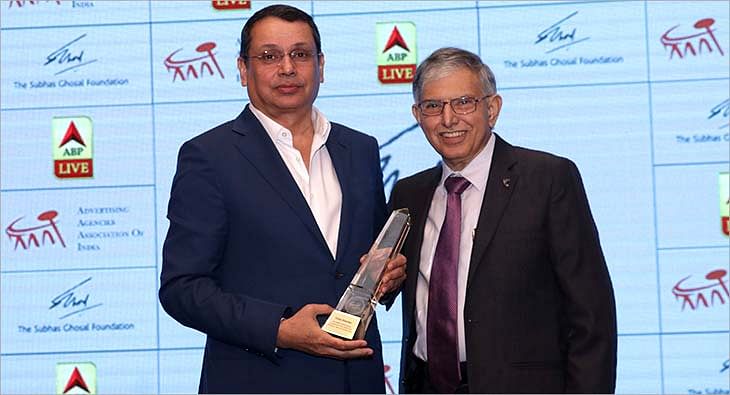
Amidst an audience packed with the who’s who of the media industry, Uday Shankar, President, The Walt Disney Company, Asia Pacific, and Chairman, Star and Disney India, delivered the AAAI Subhas Ghosal Memorial Lecture 2019.
“Three decades ago, when I was starting out as a newspaper journalist, I hadn’t imagined that someday the most distinguished of my peers would be interested in what I might have to say.” But then, 30 years ago, I had no idea that I wasn’t just starting out to earn a living; I was embarking on a discovery of India and that I would get to know this country in a way that probably no other profession would allow me to,” Shankar exclaimed as he delved deeper into his journey so far.
Starting his career first as a journalist and then as a broader media professional let Shankar observe and understand the country deeply, objectively and uniquely. “As I slowly discovered, my profession also equipped me with an ability to impact this country and its people – both individually and collectively – in a way that few professions could have,” he remarked.
The industry leader shared some vignettes of his journey to illustrate this point. Recollecting an incident when he was barely a few weeks into The Times of India, Shankar said his Editor had asked him to do a review of the immunisation mission that the Government of India had launched to vaccinate people against preventable diseases. “Here I thought that a career in journalism would give me a chance to hobnob with the high and the mighty but my Editor obviously had other plans.”
Shankar said his brief was to examine the real impact that the immunisation mission was making on the lives of ordinary people and this landed him in Purnea, a district in the northeastern part of Bihar, where he spent a week trudging through villages crippled by extreme poverty.
And what he saw there changed his worldview forever. “I saw how a vaccine, worth less than what I paid for a meal at the Nirula’s restaurant in Delhi, could make a permanent difference to the future of a child and often a family. And this wasn’t true for only one or a few families… I saw villages after villages and I saw them day after day. On the other hand, I also saw how difficult it was…even with the best of intent...to deliver that vaccine to someone that could change a life. I saw some of the most dedicated and driven healthcare professionals with no expectations of any returns. Of course, there were slackers and even crooks, but I saw an overwhelming number of ordinary professionals who were driven by a sense of duty and a desire to help the helpless. This was all very different from what I, as a firebrand student and activist in JNU, had believed and argued about,” Shankar said.
He noted that the real India was a lot more layered and nuanced and the worst mistake one could make was to try to put it into stereotypes and clichéd ideological categories. That experience went on to become one of Shankar’s critical lenses for looking at India for the rest of his life. “The reality is complex… very complex… whether for a journalist or for a businessman or a politician. The ones who succeed are those who are able to grapple with all elements of the complexities and do not rush to hasty conclusions,” he asserted.
Sharing more about his experiences, Shankar said: “I could go on about the experiences that have shaped my understanding of India and built in me a life-long desire to examine the facts for myself and not be swayed by claimed superior wisdom. But not everyone has the luxury or the facility to dive into facts or situations themselves. That is why they come to us, the media folks – the journalists, the advertisers and the story tellers because they believe that we can help them make sense of their world. They trust us and our assessment and our judgement.”
How critical is that trust was brought home to him one winter morning almost 20 years ago when he was running Aaj Tak, a 24-hour news channel that he had helped launch for the India Today Group. “We had run a news break on Aaj Tak about a school bus accident in Noida. The information was only partially correct. We were right about the accident but the school that we mentioned had many branches and we had mentioned the wrong branch. We recognised our mistake and corrected it within 20-30 minutes. Throughout that day, I was getting calls from a woman who was working for the government. My assistant said she was very keen to speak to me but maintained that the call was personal. Finally, after several hours I returned her call. She thanked me and was very polite but what she told me still haunts me. It seems she was a war widow who was supporting her two kids who went to the same school whose bus we had mistakenly claimed was involved in the accident. The accident had happened near her house. She told me that since she lost her husband in Kargil, she was always fearful of something happening somewhere, due to which she might lose whatever remained of her fractured world. She told me Aaj Tak was her window to the world and at her home the channel was always on because she believed it always alerted her about what lay ahead.
“She said, for a moment, Aaj Tak had brought her world crashing down. For a few minutes, the channel that was her most trusted ally in this fearful world had turned her world upside down...falsely. In a very calm voice, she told me she thought we were always to be trusted and were even infallible, but we broke her trust with that mistake. And that she could never trust us again. For a moment, I thought she was overreacting, after all we were human too. But as her world slowly sank in, I understood what she meant. She had given me the most valuable lesson about the centrality of trust and credibility in our business. While she was talking about news, this is no different in entertainment or in advertising or in any other part of our business. For the last 20 years, her words still echo in my years… and even now she often serves as voice of caution to me. Am I breaking someone’s trust to promote my business or my self-interest. I hope I don’t fail her again,” Shankar said as he opened up.
During the speech, he also looked back at an incident that changed the course of his career in a big way. Shankar acknowledged that even as a newspaper reporter he was smitten by TV. “The year was 1991, and the event was the First Gulf War being telecast on CNN - just my idea of love at first sight! I just wanted to do TV news. One day, my wife said that instead of just wishing that I had an opportunity why didn’t I do something about it. I was well settled, a senior editor at a niche but respected publication called Down To Earth, but my wife’s words had the right effect on me and the next day I quit my job.”
After struggling without a regular income for over six months, during which his wife’s earning was the only thing to go by, Shankar found a job at a news bulletin that Zee was launching. But there was a difficult trade-off – he had to take a salary cut of more than 50 per cent. “A journalist’s salary wasn’t very high anyway, but a 50 per cent cut! That hurt. But I took it,” he said. What followed was a period of incredible financial challenges for about five years, then came Aaj Tak and his personal situation also became comfortable. “Aroon Purie is a fair employer. But this period of struggle was of a series of learnings – personal and professional. However, the most important lesson that I learnt was to follow my heart, hear my inner voice and not worry too much about the consequences when one is convinced that this is the right thing to do. I have followed that ever since... and it has held me in good stead,” Shankar asserted.
Revealing another life lesson that he had picked up along the way, Shankar recounted the time when he had been running Aaj Tak for a few years and was incredibly successful and comfortable. “But a question began to nag me – how much of the success of Aaj Tak was mine and how much of it came to me because I happened to be at the right place at the right time. The only way was to test myself once again,” he said.
Along came an offer from Star News and Shankar took it. “On the face of it, it was a bad decision. Star News was at the bottom of the heap and wasn’t falling further because there was no further depth to fall. Once I took over, I realised that content, which I understood and had been brought in to do, was just one of its problems - its marketing, distribution, sales, morale, leadership and whatever else that you can think of had gone wrong. The problem was that I didn’t know anything about any of this and there was no one else who cared or was willing to help. Star News was as messed up as anything could ever be. All the success and equity that I had created for myself was at risk. I should have run for my life. Instead, I decided to dive headlong and took over as CEO. Everyone thought I was going to break all the previous records for the most disastrous stint as a media CEO. The problem was that even I couldn’t disagree with that forecast. I knew nothing of running a business, let alone fixing a broken business. But as a journalist I had learnt one thing – that when you don’t know something, go to people who understand it better than you. That’s what I did. I went on and hired some good people. People who were good at their jobs but made me look really stupid in that area. Of course, content was my forte. So I focused on content and hiring good talent, and I focused on not being defensive about what I didn’t know. I also asked them many questions… I challenged them to think different. Slowly we turned the tide. Star News moved from the bottom of the pile to the top. It also got me the offer from the then NewsCorp to run Star India. This was by far the most coveted and prestigious job for a media professional. It was a great reward for what I had done so far,” Shankar revealed.
He contended that there were many who found NewsCorp and the Murdochs’ decision pretty shocking. “In all honesty, I too wondered why would I be offered that job? Star then was much smaller but was still one of the biggest media companies in India. At Star News, at least content was my forte. Here I had no such advantage. I had no experience of entertainment content... and even less of other areas of business. I recall discussing this with me wife and my daughter, who was very young then. I asked them if I was taking a risk. Very innocently, my daughter asked me what risk did I think I was taking? She said ‘aren’t the Murdochs the ones who are taking the risk?’ So that was the context in which I walked in,” said Shankar.
What didn’t seem to help matters was that there was an exodus from the company because two of the most formidable former executives of Star were launching their own channels and clearly the staff at Star India had more faith in them than in me.
“First and foremost, from my journalistic experience, I was aware that a crisis could be a tremendous opportunity and what I had walked into Star was a crisis,” remarked Shankar. However, instead of putting a patchwork to quickly fix it he decided to play the long game and do the right things. “A lot of very good and senior people had left. I decided I shall over-index on intelligence, youthfulness and irreverence. I also decided to discount experience. Oxymoronic as it might sound...in my experience... cliched thinking and laziness come with the package called experience. By the way, no one in my leadership had any previous media experience either. But I was convinced that between the people at Star and me, there was enough understanding of media in the company,” he recounted.
This unleashed really powerful forces in the company. “The new talent questioned ways of doing things in media… and the media veterans at Star questioned them. I had set one ground rule: we won’t follow you because of who you are. You have to convince the room with facts and arguments. I asked a lot of questions to everyone and also pushed everyone to question me and others. Challenging and questioning the status quo or the dominant thinking became the culture of Star. That, I would like to believe, is still how it is. Hindi was the most profitable market in entertainment and Star was its leader. Even as our leadership was under pressure from new challengers, we were going into regional markets and once again, with the same approach – to disrupt the status quo in each of those markets, except perhaps in Kerala where we were the market,” continued Shankar.
Another aspect the maestro revealed was what he had learnt from cricket - that in a winning team everyone, including the captain, must have a very clear role and not just to that person but to everyone. “As we were rebuilding Star, it was very clear who would deliver what. Unfortunately, in a winning team, it’s also possible for a person to just do the odd job and get by because the team is winning. Culturally, that is probably more destructive than anything. I have tried to guard against that. Honestly, it can be a big challenge in bigger and successful companies,” Shankar said.
He further pointed out that one would be surprised to know how few content companies have content at their core. “At Star, I have tried to push that several years ago to disrupt Star Plus itself, to challenge Star Plus, to shut down wildly successful shows to try out new story tellers... and above all to tell stories that did not fit in the usually “experienced” understanding of good stories. The best example of that is - Satyamev Jayate. It was a show that everyone thought didn’t belong on an entertainment channel. After all, who in their right mind would advise an entertainment channel to run a show on the Sunday morning slot, discussing delicate social issues with the entire family sitting around? But in the hindsight, Satyamev Jayate made a real impact on shaping our society, and I say this with a touch of pride.”
Then there was sports…famously the graveyard of media companies…but Star decided to get into sports. “We doubled down on cricket – ICC, BCCI and then IPL. No media company had ever invented so much in cricket or perhaps in any one sport as we had. Then we decided to double down on Indian languages. As if that wasn’t enough, we decided to risk our destiny on such sports as kabaddi. It’s worked out well…our sports business is still very much work in progress, as is the sports consciousness in India. But we are surely building one of the most exciting franchises in the world,” Shankar added.
But the next adventure was even crazier. “When India was dismissed as a data dark market and mobile was a device only for talking, we decided to launch Hotstar. Everyone thought that we were crazy…we certainly were. But we believed in this country…it’s surprising ability to leapfrog and we believed in ourselves. With Hotstar, once again we went by our playbook – get the best talent that you could and disrupt the ecosystem. Streaming was still supposed to be a catch-up medium. We decided to put all our live sports on it, we even decided to put our entertainment content on Hotstar ahead of its airing on our channels.”
Shankar also spoke about the advertising campaign that said ‘Get Over TV’. “India’s biggest TV company was talking about getting over TV, and that too, the campaign ran most aggressively on our own TV channels. The verdict was that this time our craziness had crossed all limits, even our colleagues at Star were aghast and upset this time. Maybe we went too far but without that we couldn’t have created the most successful video streaming platform outside of the US and China, that too in a country which was not supposed to be ready for streaming. When we were launching Hotstar, a senior executive at one of the global tech and video giants had warned us – ‘go ahead and try it… you will lose a lot of money and effort and then you will come to us begging to host your content. Don’t worry... we will be kind.’ Now they can’t get tired of hiring our talent… not just one company, any global tech and media company that’s active in India seems to have just one destination to pick up talent – Star India. It is annoying but it is also a tribute to the team that we have at Star India. Thanks to Hotstar, people of this country can consume high quality drama, movies and sports on their 30 dollar mobile phones, no matter where they are. Of course, Jio has been an incredible partner in that journey,” he shared.
“I am in media for 30 years and it feels like I am just getting started. Because the media industry has allowed me to not only understand and experience India in an unbelievable way, but over the years we have become change agents for India. At Star, we don’t just believe in a better India, we believe in our duty to participate and shape that India. Of course, when a company like the Walt Disney Company values and embraces the business we have built, the feeling is immensely gratifying,” Shankar said as he signed off.
Read more news about (internet advertising India, internet advertising, advertising India, digital advertising India, media advertising India)
For more updates, be socially connected with us onInstagram, LinkedIn, Twitter, Facebook Youtube & Whatsapp
Why TV distribution firms have taken the OTT plunge
Apart from providing TV channels to OTT players, distribution operators are also acquiring and launching their own digital platforms

The rise of digital consumption has led to fierce competition in the media industry in the bid to acquire new customers and retain existing ones. Apart from broadcasters getting into content generation, TV distribution companies have taken the plunge into acquisition of new content, launching of new digital platforms along with distribution of TV and OTT content.
For instance, Tata Sky's DTH (Direct-To-Home) service provider partnered with OTT platforms like Hotstar, Sun NXT and Eros Now to launch its digital content service - Tata Binge - and the service was priced at Rs 249 per month. The viewers can watch thousands of movies, TV shows, curated short videos and missed episodes of TV shows aired in the last seven days. In 2018, Tata Sky signed a deal with London-based TV channel Shorts TV and made its content available on the Tata Sky app. Dish TV, too, has forged partnerships with OTT platforms and launched its own OTT app Watcho this April. The platform offers 1,000 hours of library content, including movies and short films.
Cable operators too have joined the space of providing OTT content to consumers. For instance, Hathway has partnered with Netflix and offers free subscription to Play Box (OTT set top box) users. Users can avail 12 months’ subscription of Sun NXT.
According to Sukhpreet Singh, Corporate Head-Marketing, Dish TV, “The consumption behaviour of consumers is changing. Distributors believe their main job is to provide the best of content and entertainment to subscribers. We all want to consume online entertainment, whether it is from free or paid sources or from various apps.”
In partnership with Amazon Fire TV, Tata Sky aims to redefine the future of entertainment for millions of Indians by extending the ‘Tata Sky experience’ to the world of apps with Tata Sky Binge.
Pallavi Puri, Chief Commercial Officer, Tata Sky, says: “Through this partnership we are giving customers the Amazon Fire TV - Tata Sky edition without any additional cost to enjoy Tata Sky Binge.”
Bringing a variety of content on one platform, distributors are not only keeping up with the changing audience but also competition from telecom companies, which have started to become a major provider of content through data streams.
There has been an increase in the number of consumers watching video online, and the infrastructure too has evolved in terms of affordable Smart TVs bringing digital videos to people’s living rooms. This has led to DTH operators too trying to evolve to stay relevant in the future.
Girish Menon, Partner and Head, Media & Entertainment, KPMG in India, said: “Traditional television distribution in India is definitely likely to face headwinds from digital distributors such as telecom operators and ISPs.”
Currently, most DTH operators are tying up with OTT platforms and providing access to online content on Smart TVs through hardware enablers such as Set up Boxes or Smart Sticks. DTH players are also trying to tap the currently underserved wired broadband market and bundling both access and content in one package, helping them acquire new customers. “Access to online content as a strategic initiative will help control churn for DTH operators and act as an important customer retention tool,” Menon explained.
Post implementation of New Tariff Order (NTO), there was a disruption in the broadcast industry. “The disruption happened because of a change in pricing and packages. Life has been very tough for the consumer. The disruption has had some effect on the consumers and that is what has led to consumers to opt for OTT, especially when OTT provides linear channels at a much lower rate or no cost at all,” said industry expert Shaji Mathews, former CEO of Kerala MSO KCCL.
But are these profitable for distribution operators? “If you monetise well, it could be profitable,” says Mathews. “Regulation is also needed in such circumstances as you cannot continue giving free content,” he added.
Read more news about (internet advertising India, internet advertising, advertising India, digital advertising India, media advertising India)
For more updates, be socially connected with us onInstagram, LinkedIn, Twitter, Facebook Youtube & Whatsapp
NBSA reiterates guidelines for news channels on Ayodhya matter
The NBSA urged news channels to adhere to the Code of Ethics & Broadcasting Standards and exercise caution to ensure coverage of the matter is not sensational, inflammatory or provocative in nature

The News Broadcasting Standards Authority (NBSA) has issued a special advisory laying out strict guidelines for news channels to follow while reporting on the Ayodhya case matter. The Supreme Court is expected to pronounce its ruling on the matter today November 9th, 2019.
The NBSA urged news channels to strictly adhere to the Code of Ethics and Broadcasting Standards and exercise extra caution to ensure that broadcasting of the news is not sensational, inflammatory or provocative in nature.
According to the advisory, "No broadcast should be made in any speculative manner in respect of the present proceedings before the Hon'ble Supreme Court nor of the judgment before it is pronounced; and of its likely consequence thereafter which may be sensational, inflammatory or provocative".
It goes on to say "No footage of the demolition of the Babri Masjid is to be shown in any news item relating to the Ayodhya matter".
See below the full advisory issued by the NBSA


Read more news about (internet advertising India, internet advertising, advertising India, digital advertising India, media advertising India)
For more updates, be socially connected with us onInstagram, LinkedIn, Twitter, Facebook Youtube & Whatsapp