

International: MindShare is Ad Age's Global Media Agency of the YearStarcom mediavest named U.S. media agency of the year
MindShare is the Ad Age’s Global Media Agency of the year. It was no easy feat: MindShare was expected to win. Industry observers agree that the WPP Group media agency held the upper hand. For pulling off its stunning victory, Advertising Age names Starcom MediaVest Group its 2003 U.S. Media Agency of Year. SMG faced tough competition for the Ad Age honor but tipped the scales largely due to the Coca-Cola consolidation victory (SMG already had Coke's planning account).



When Starcom MediaVest Group started preparations for the $350 million Coca-Cola Co. review, the scope of the pitch was huge. The North American unit of Publicis Groupe spent around 12 weeks pulling out every stop to ensure the win.
"We pulled resources from everywhere, we went through five to six meetings and boiled it down to eight people," says MediaVest USA CEO Laura Desmond. "There was basic media planning and buying, research, consumer insights, programming, product placement, entertainment marketing and integration solutions."
One of the hotly contested reviews of 2003 came to a simmering conclusion in November. Decision day was Nov. 24, remembers Ms. Desmond, who says that waiting to hear from Coca-Cola was one of the most intense periods of her career. At 1:20 p.m. the phone rang; her secretary connected Ms. Desmond to Coke's David Raines, vice president of integrated communications.
His first comment was: "Congratulations [on winning the account]. How do you feel?" Ms. Desmond's response was, "It feels great, thank you." After a brief conversation, Ms. Desmond called SMG CEO Jack Klues on his cell phone. He was in London standing next to Maurice Levy, Publicis' chairman-CEO. Naturally both were thrilled.
"I have spent 10 years working on Coke business. That all prepared me for this moment," says Ms. Desmond. The company's 450 staffers crowded into the company's atrium for Coke-based cocktails, which flowed until 2 a.m.
After 20 years of partnering with Universal McCann for its media buying, Coca-Cola yanked its business away from the Interpublic Group of Cos. shop.
For pulling off its stunning victory, Advertising Age names Starcom MediaVest Group its 2003 U.S. Media Agency of Year. SMG faced tough competition for the Ad Age honor but tipped the scales largely due to the Coca-Cola consolidation victory (SMG already had Coke's planning account).
It was no easy feat: MindShare was expected to win. Industry observers agree that the WPP Group media agency held the upper hand because of the chummy relationship between Coca-Cola's president and chief operating officer, Steven Heyer, and WPP Group CEO Martin Sorrell. Mr. Heyer in the end is said to have given his team leeway to pick the agency that demonstrated it was up to the job.
Coke's Mr. Raines said at the time he called the review a "very close" competition, adding that SMG's "highly collaborative" methods and global "all-star" staffing gave the shop an edge over its competition. "They have a suite of tools to support resource allocation and understand the best ways to allocate their dollars to have the right message to the right consumer."
As Ms. Desmond puts it, "We set the standard for strategic alliances, for moving beyond cash for media. It is no longer about [cost per thousand] efficiency. It's consumer value, and we are set up for that."
And it was the Coke victory that edged SMG ahead of rivals such as MindShare for the media agency honor. Omnicom Group's OMD was another close contender as the winner of the year's biggest review, the $1.2 billion global McDonald's Corp. account.
Speaking at Ad Age's Madison & Vine conference last year, Mr. Heyer called for a revolution in the way agencies operate on behalf of marketers. He even went as far as to suggest agencies think of charging media outlets such as TV and Hollywood to access Coke's huge global distribution channels.
Well, SMG didn't quite go that far, but it did make a lot of promises to Coke, according to executives close to the pitch. "I felt like that brief was mirroring what we were trying to drive here," Mr. Klues says. "I felt like we were well-qualified to address the brief. Maybe uniquely qualified."
Did SMG offer to help Coke out of sports sponsorship deals that the marketer had committed to and was looking to unload? The agency won't say. Mr. Klues appears to give some credence to industry commentators who suggest SMG promised to take no fee if it didn't deliver on pricing, still a staple despite Mr. Heyer's talk about sponsorships.
While Mr. Klues declined to discuss the agreement specifically, he did say: "No one should worry that we aren't going to get paid so long as we deliver. Do you expect to get paid if you don't meet expectations? We live in a world where you have to, and where if you overdeliver you might get paid handsomely."
Mr. Klues suggests that if agencies are to thrive, they have to live in the world of contemporary client thinking. "The expectation is big in both strategic innovation The full 19-page Annual Media Agency Report can be found in the Feb. 9, 2004 print edition of 'Advertising Age.'
The agency is gearing up to deliver on its promises. SMG's MediaVest USA has begun building Coke City, a separate team of people with skill sets along the lines of Starcom's GM Planworks, General Motors Corp.'s planning division in Detroit. MediaVest USA has lured Dan Donnelly from Anheuser-Busch Cos. to be director of investments under Nancy Mullahy, who is CEO of the new unit.
Thanks to the Coke win, SMG grew U.S. billings by 11% to 12% to an estimated $12 billion, though about 10% of last year's growth came from existing clients. Among SMG clients spending more in 2003 were Kellogg Co., Sun Microsystems, Walt Disney Co., Avon Products, Heineken and U.S. Army.
The winning streak continued into 2004 as MediaVest last week snared the consolidated $300 million media buying and planning account of Mars Inc.'s Masterfoods USA.
However, when asked how SMG has grown over the year, Mr. Klues puts less emphasis on new-business wins than the company's expertise in consumer intelligence. Mr. Klues has been working to bring what SMG calls Consumer Context Planners (CCPs) into the stable. They're a new breed of planners who mix expertise in consumer behavior with knowledge of media research. These executives might know, for instance, how many people watching NBC's Friends may also be Coke drinkers. The CCPs are media neutral in that they recommend that marketers reach out across a number of touchpoints in any single day, whether it's a TV spot or a public relations pitch.
Among the vice presidents of CCP are Kendra Hatcher, who works on Coke and joined the company in late 2002. Coming on board in 2003 were Bambi Kapp, who works on the P&G account; Jane Larcher on Kraft Foods; Katy Persky, who works on P&G; and Andrew Hebden in the SMG/P&G unit.
Other CCPs work at GM Planworks under Jana O'Brien, executive director of strategic research, as well as at Starcom offices in Chicago and Los Angeles.
"They don't come from media geekdom," Mr. Klues says. "It is a skill set that didn't exist. We've had strategic media planners and we were touching the surface, but not going after it. Planning is the new battleground," he says, commenting on the Masterfoods consolidation.
Michael Browner, executive director of media and marketing operations at GM, praises Mr. Klues for helping set up GM Planworks. "They deserve credit for collaborative plans on jointly funded research," Mr. Browner says. "Our research division came from SMG. Their work in planning is second to none." He says the agency has helped the carmaker understand the consumer's relationship with media in much more depth.
Senior management also saw some switches. Shortly after garnering an Ad Age Media Maven award in 2003, Mel Berning leaped to the buyer side, joining A&E Networks as executive vice president of ad sales in December. However, MediaVest plugged the gap bringing in Donna Speciale, who replaced Mr. Berning as president of U.S. broadcast at MediaVest USA. Ms. Speciale came from Grey Global Group and was formerly MediaCom executive vice president and director of national and local broadcast.
MediaVest USA bolstered its entertainment connections after hiring Brian Terkelsen, senior vice president and director of entertainment marketing. Mr. Terkelsen is a former executive producer who worked closely with reality guru Mark Burnett. He took over some of the responsibilities of Jeff Grant, who exited as president of worldwide programming.
Another addition to MediaVest in June 2003 was Adam Gerber, who became senior vice president and group director of strategy and innovation, a newly created position. Mr. Gerber works within the national broadcast group to devise interactive TV and new media strategies for brands such as Tide, Pampers, Crest and Charmin. Mr. Gerber was previously a digital media expert at WPP Group's Digital Edge.
New management had to face its share of challenges. The closure of D'Arcy Masius Benton & Bowles at the end of 2002 could have created some instability given that MediaVest was D'Arcy's buying group. As Publicis Groupe slowly erased the D'Arcy brand and distributed clients to other holding company agencies, there was a fear that MediaVest might lose shared clients such as Capital One.
Though the credit-card company did move creative to Interpublic's McCann-Erickson Worldwide, media stayed within the SMG family. Starcom lost Bank of America after two months to McCann sibling Deutsch.
Last year was also not noted as a great new-business year for any agency, but SMG grew substantial new business from existing accounts. Organic growth was 10%, and in October, Kraft upped its spending with SMG, adding the agency's Tapestry unit as multicultural buyer and other divisions such as SMG IP, a digital unit; SMG Entertainment; and sports specialist Relay.
In addition to the big Coke win, SMG picked up the $168 million Gateway account, DirecTV, Cadbury Schweppes and Red Bull; in addition to Bank of America, it lost Polaroid Corp.
"We didn't have a phenomenal external new-business year," concedes Renetta McCann, CEO of Starcom, North America. Instead, she says her agency focused on the existing client base. "Our people put themselves to work to solidify existing relationships," she says. "A testament to how we worked the transition is Disney."
The business began with movies and moved into theme parks, ABC Inc. cable networks including ESPN, and home video. "We work on about 15-16 lines of business."
When asked to describe SMG, New York-based Morgan Anderson Consulting's Arthur Anderson says, "They are strong in nontraditional media, that's part of why they picked up Coke. They do planning for General Motors, which wouldn't be there if their strength wasn't in planning. Planning, research and nontraditional media are places to differentiate yourself and they have two of the three."
Overall, Mr. Anderson says, most media agencies have had a hard time distinguishing their capabilities. He says SMG could do a better job of showing how its expertise in new and emerging media has helped marketers. "Reality has to get ahead of perception," he says.
SMG would argue that it's not all talk. For six months in 2003, SMG took a leadership position in building a broadband marketplace. In May, Mr. Klues told an audience at the iMedia Summit in Phoenix that he wanted to expand digital opportunities for clients to distribute their ads via the Internet.
At the time he said: "With streaming video and gaming sites like Atom Shockwave, services like Yahoo! Platinum and compelling technologies like Unicast, clients can use the Internet as another way to expose their video messages to key clients."
By August, an SMG Broadband team had finalized a series of policies and practices to make the digital marketplace more measurable and had buy-in from a group of sites including Yahoo!, Time Warner's America Online and Feedroom.
Rishad Tobaccowala, executive vice president of SMG, oversees SMG IP, the company's emerging technology division. SMG IP expanded its capabilities in 2003, launching SMG Play, a new unit targeting gamers. Play is aimed at finding marketers opportunities with video and online game creators such as Electronic Arts.
Mr. Tobaccowala criticizes those who think product placement is the answer to their problems. "The industry is running to Hollywood and saying product placement will solve everything," he says. "We think product placement and buying shows is the lazy person's answer." SMG's way of doing business places the emphasis on the partnership. "Here is an insight we have, let's come up with something. We say let's develop something together."
Other SMG IP units include TV 2.0, which tackles interactive TV opportunities, and SMG Next, an incubator for new-business projects that look to capitalize on technology.
SMG IP increased staff from 62 to 70 and grew revenue by 20% though no real figures are given. "The key thing in 2003 was to build on the momentum of what was regarded as one of the best digital planning and buying units," says Mr. Tobaccowala.
Projects have included work on goarmy.com, the U.S. Army's recruitment site. "SMG is hoping the future comes real fast," Mr. Tobaccowala says, adding that SMG Next is currently discussing some music ventures, though he won't be specific.
As the new year unfolds, Publicis watchers will be waiting to see how the relationship between SMG and ZenithOptimedia Group unfolds. Talk of an overarching media-buying umbrella structure, dubbed Publicis Media, is premature, says Mr. Klues. He doesn't appear to support such an idea.
Mr. Klues, who's tipped to rise further within the Publicis hierarchy, says any merger between SMG and ZenithOptimedia would be unthinkable. But that's not to say the two won't be cooperating more fully.
SMG knows it needs to improve outside the U.S., and even Mr. Klues concedes it could be doing better in Asia. When asked what he would like to see SMG achieve in 2004, Publicis' Mr. Levy responds, "I'd like to see growth from everywhere, and it is coming. What [SMG] needs is to strengthen in Asia to make them an even bigger player."
Mr. Levy, who participated in the Coke pitch, says what he saw there was the reason that SMG continues to thrive. "They are working with a much wider angle than the competitors," he says. "Something everyone could feel [at the Coke pitch] was the passion, about their jobs, about the clients."
Source: AdageRead more news about (internet advertising India, internet advertising, advertising India, digital advertising India, media advertising India)
For more updates, be socially connected with us onInstagram, LinkedIn, Twitter, Facebook Youtube & Whatsapp



TOP STORIES

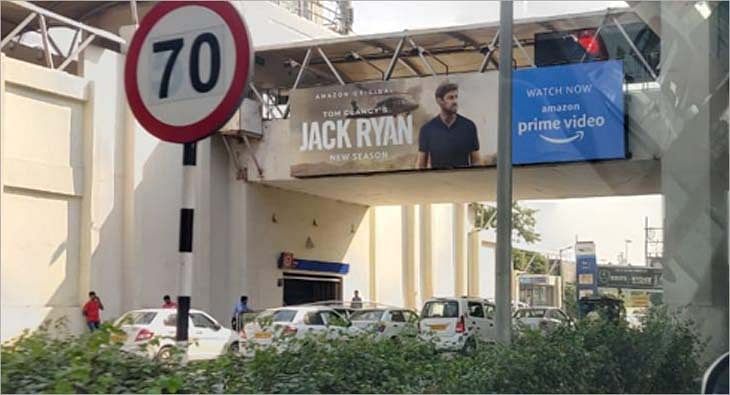


Uber appoints Lucinda Barlow as Senior Director of Marketing for Asia-Pacific
Prior to this, Barlow was Global Marketing Director at YouTube


Uber has appointed Lucinda Barlow as Senior Director of Marketing for Asia-Pacific. Barlow will be based in Australia and will be responsible for the marketing of Uber products and businesses other than food delivery service Eats.
Prior to this, she was Global Marketing Director, YouTube. She worked for Google as head of corporate communications and public affairs and later as marketing director for Australia and New Zealand. She has also worked for Symbian, the company that created the operating system for Nokia’s range of smartphones.
‘Uber has had an extraordinary impact on the lives and livelihood of millions of people. I’m thrilled to join the Asia-Pacific team to help bring further mobility, freedom and opportunity in this exciting region,’ Barlow was quoted as saying.
‘She (Barlow) is uniquely positioned to lead Uber’s Asia Pacific brand, product marketing and reputation efforts, and support the continued growth of a stellar regional team,’ a press note from Uber said.
‘Lucinda brings over 20 years experience in internet, technology and mobile business across Asia, the United States and UK. From a former mission critical systems engineer at BHP, to leading YouTube marketing globally, to launching Symbian’s first office in China, to building marketing functions at two internet start-ups, Lucinda is an agile leader with an industry acclaimed track record of delivering impact at a staggering scale.’
Barlow wrote on twitter:
Incredibly excited for my next chapter. I'm joining Uber to lead marketing in APAC. This is a company and region I'm passionate about. https://t.co/IQB5cjfECq
— Lucinda Barlow (@lucindabarlow) October 9, 2019
Read more news about (internet advertising India, internet advertising, advertising India, digital advertising India, media advertising India)
For more updates, be socially connected with us onInstagram, LinkedIn, Twitter, Facebook Youtube & Whatsapp
 Share
ShareWPP AUNZ's Switched On to join AKQA, Australia
The joint entity’s emphasis will be on rich, innovative brand storytelling throughout the entire customer journey

WPP AUNZ has announced its Sydney-based digital marketing and media consultancy, Switched On, will join the Australian arm of global innovation and experience design agency AKQA.
This union is in direct response to client interest and demand for comprehensive digital solutions that help define, find, connect and inspire customers across all brand interactions, from acquisition through to retention. The joint entity’s emphasis will be on rich, innovative brand storytelling throughout the entire customer journey, bringing clients’ long-term brand purpose to life whilst maintaining a laser focus on short term performance.
John Steedman, interim CEO WPP AUNZ said: “This is two teams with momentum becoming one, and a bold move by them both. It’s driven by a burning desire to provide pioneering solutions from two highly experienced senior local teams.
“Joining Switched On and AKQA formalises the close working relationship both agencies already have. The partnership uniquely combines media, tech, data and design literally under one roof. The result is a stronger client offering and WPP AUNZ is proud to support them,” Steedman concluded.
By fusing their respective MarTech and AdTech capabilities, the driving principle will be to deliver on the unfulfilled promise of large technology platforms and connected transparent media investments.
“This initiative is a terrific example of our team’s growth mindset and a shared vision of the future. Both agencies are at the top of their game. It’s a powerful combination that offers a modern, post-broadcast perspective to the interface of customer and brand,” said Brian Vella, AKQA Managing Partner.
The new offering builds on the success of AKQA Media in San Francisco, an elite business that delivers a 360-degree view of brand experience for clients including GAP, Volvo and Uber through an integrated approach to media, technology, and data.
“AKQA Media is widely regarded as one of the world’s premier media and technology agencies, something we believe will resonate well with Australian marketers,” Vella continued.
“As the worlds of marketing, technology, and customer experience converge, it’s clear a strategic reprioritisation of brand building is essential. We feel what’s needed is a unified proposition that straddles the need to balance this long-term vision with the reality of short-term performance in today’s digital age. That’s why we’ve come together,” said Chris Hitchcock, Managing Director, Switched On.
The combined entity’s capabilities offer an unrivalled depth and breadth of experience with more than 300 team members covering:
- Digital Consulting
- Performance Media
- Creative Strategy & Storytelling
- CX and Transformation Strategy
- Experience Design
- Communications Planning and CRM
- Technology and Engineering
- Commerce Data, Insights and Personalisation
- Innovation and R&D
- Social and Influencer Marketing
Switched On will continue to be led by Managing Director, Chris Hitchcock, responsible for the continued success of the Switched On team and its integration into AKQA. Hitchcock will join the AKQA Executive team, reporting into Brian Vella, Managing Partner of AKQA in Asia Pacific. Both agency brands will continue, with Switched On transitioning to become AKQA in the future.
AKQA operates in 28 markets globally, with over 2100 people worldwide. In APAC the studios who collaborate closely include Melbourne, Sydney, Auckland, Tokyo, and Shanghai. It most recently was awarded two Grand Prix Lions at the Cannes Lions Festival of Creativity.
AKQA and Switched On are part of WPP AUNZ, Australasia’s leading creative transformation company.
Read more news about (internet advertising India, internet advertising, advertising India, digital advertising India, media advertising India)
For more updates, be socially connected with us onInstagram, LinkedIn, Twitter, Facebook Youtube & Whatsapp
Helena Snowdon is Publicis Media ANZ’s new business and marketing head
The former Mindshare MD, who has also been previously associated with top global media agencies like PHD, Maxus and iProspect, replaces Mandy Henry

Helena Snowdon has been appointed Publicis Media’s head of business and marketing for Australia and New Zealand, as per media reports. The former Mindshare MD replaces Mandy Henry.
Snowdon has been previously associated with my global media agencies, including PHD, Maxus and iProspect. She was managing director Mindshare Melbourne from May 2017- September 2018.
“I feel privileged to be joining Publicis Media, working with the executive leadership team in ANZ, as well as the talented teams at Starcom, Spark Foundry, Zenith and Performics,” Snowdon was quoted as saying. “Publicis Media presents a progressive and transformative model which opens up huge opportunities for clients. I’m looking forward to playing my part in communicating this message and meaning across ANZ, and driving further impact and growth for the business overall.”
Read more news about (internet advertising India, internet advertising, advertising India, digital advertising India, media advertising India)
For more updates, be socially connected with us onInstagram, LinkedIn, Twitter, Facebook Youtube & Whatsapp
CNN International Commercial appoints Phil Nelson as Chief Operating Officer
Previously, Nelson was Managing Director, Turner North Asia and South East Asia Pacific
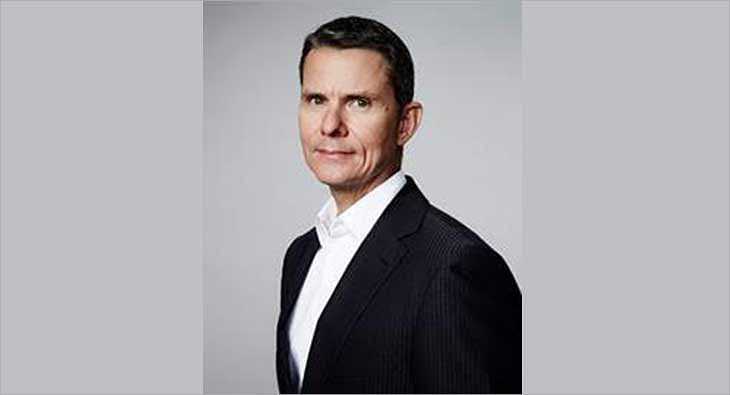
CNN International Commercial (CNNIC) has appointed Phil Nelson as Chief Operating Officer (COO) to lead CNN’s operational and international growth initiatives outside of advertising sales.
As COO, Nelson will oversee CNNIC’s Business Development and Strategy, Finance, Strategic Planning and International Sales Operations as well as its Content Sales and Licensing. This includes managing and growing CNN’s relationships with over 300 digital, broadcast and Out of Home content partners – from local CNN branded channels to airlines and hotels that carry CNN content live and on-demand.
Previously, Nelson was Managing Director, Turner North Asia and South East Asia Pacific. In this role, he has overseen all aspects of Turner’s business in these regions including distribution of CNN International and taking a key role in establishing local partners CNN Indonesia and CNN Philippines. Nelson has also held other business development and strategic planning roles at Turner since he joined in 2010 and has significant digital experience from his time at AOL, culminating in him being Managing Director for AOL Asia. In addition, Nelson holds an MBA from Harvard University and, prior to entering the corporate sector, was a commander in the US Navy.
Nelson will be part of the CNNIC Senior Management team, reporting directly into Rani Raad, President of CNNIC, and will work closely with a wide range of divisions across CNN and WarnerMedia. Nelson will continue to be based in Singapore in the near-term and his team is spread across the globe, particularly in key CNNIC hubs of Hong Kong, Singapore, London and Miami.
“The CNNIC business has continually evolved since it was created back in 2013 to optimise the revenue, brand and commercial partnerships across our dynamic offering of CNN content and products,” said Rani Raad. “I am delighted that Phil joins us as we enter the next chapter of our business in a role that brings together all the operational, strategic and non-advertising sales revenue under one leadership. Phil has a first-rate track record at Turner and will bring a unique skillset of business acumen, creative thinking and forensic focus.”
“After many successful and exciting years at Turner Asia, I am very pleased that my next move is within the WarnerMedia family to a brand as remarkable as CNN,” said Phil Nelson. “CNNIC has done a great job in innovating and adapting its business to stay ahead of the competition during a period of unprecedented change in the news and media industry. I am looking forward to contributing to this success in the years to come.”
Read more news about (internet advertising India, internet advertising, advertising India, digital advertising India, media advertising India)
For more updates, be socially connected with us onInstagram, LinkedIn, Twitter, Facebook Youtube & Whatsapp
Giorgio Presca named Clarks CEO
Presca to join in March, will manage operational, financial and commercial aspects of the business and lead the Clarks strategy with the Executive Committee
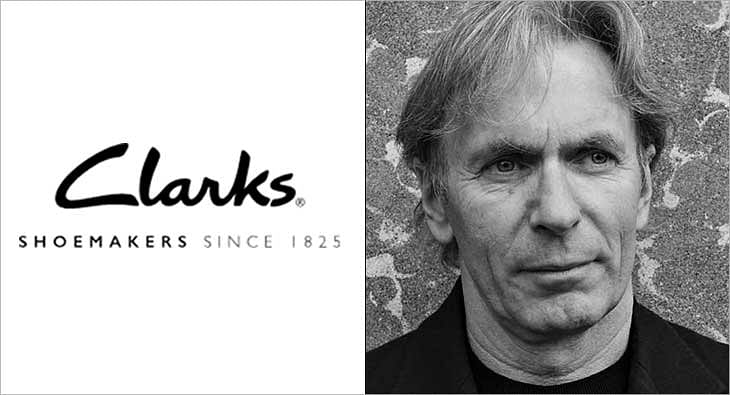
Clarks, the global casual footwear brand, has announced the appointment of Giorgio Presca as Chief Executive Officer.
Presca will be responsible for all operational, financial and commercial aspects of the business and will lead the Clarks strategy with the Executive Committee. He will join the company in March.
Presca, born in Trieste, Italy, has more than 20 years of experience in managing and developing global premium brands, particularly in the footwear and apparel industries, working across listed, private-equity-owned, family-run, and founder-led businesses.
His most recent position was CEO at Golden Goose Deluxe Brand, where he led the operating transformation, rapid growth and global expansion of the business.
Between 2012 and 2016, he was CEO at Geox where he executed a brand and company turnaround and returned the business to profitable growth. Giorgio has built his track record in senior leadership positions in Diesel, VF Corporation Jeanswear International division, Citizens of Humanity, Levi Strauss & Co. and Lotto.
Commenting on the appointment, Tom O’Neill, Chairman, said: “I am pleased to welcome Giorgio to Clarks as our new CEO. He brings a wealth of experience, including a deep understanding of the footwear market. He will work together with interim CEO Stella David to ensure a smooth transition over the coming weeks, after which Stella will return to her previous role as non-executive director. I would like to thank Stella for stepping in as interim CEO at a challenging time for Clarks and for her tireless and engaging leadership in the role.”
Presca said, “I cannot wait to join an iconic and historic brand like Clarks and work closely with the Board, the Executive Committee, its 13,000 people and operating partners across the world. Clarks faces the challenges of today’s competitive markets, changing distribution channels and the need to adapt to a rapidly evolving consumer environment but has the competences and assets to return to sustainable growth and profitability in the course of the next few years.”
Read more news about (internet advertising India, internet advertising, advertising India, digital advertising India, media advertising India)
For more updates, be socially connected with us onInstagram, LinkedIn, Twitter, Facebook Youtube & Whatsapp
Tupperware appoints ex-PepsiCo exec, Chris O'Leary, to its board of directors
O'Leary has more than 37 years of operational and leadership experience, having served in several strategically important executive positions at companies like General Mills & PepsiCo

Tupperware Brands has appointed Chris O'Leary to its board of directors, according to media reports.
O'Leary joins the US-based kitchen and households product company renowned for its model of direct sales as it looks to ramp up global growth. He takes up the new role immediately.
Rick Goings, Executive Chairman, Tupperware Brands said, "We are pleased to have Chris join our board. He brings more than 37 years of operational and leadership experience to Tupperware, having served in several strategically important executive positions at major global consumer product companies including General Mills and PepsiCo. We believe the combination of his deep industry knowledge, broad international experience and strong, proven leadership skills will be invaluable to the Company as we continue to execute our global growth strategy."
O’Leary previously spent 16 years at PepsiCo, Inc., where he held numerous roles, culminating in serving as Chief Executive Officer and President of Hostess, Frito-Lay, Inc. before moving to General Mills. In almost 20 years there, he became head of international business before leaving the company in 2016. He holds a Bachelor of Business Administration in marketing from Pace University and a Master of Business Administration from New York University.
Commenting on the appointment, O'Leary said, "I look forward to working closely with board members and the management team to provide new insights and perspectives as Tupperware continues to take aggressive steps to advance its performance and drive enhanced value for shareholders."
Read more news about (internet advertising India, internet advertising, advertising India, digital advertising India, media advertising India)
For more updates, be socially connected with us onInstagram, LinkedIn, Twitter, Facebook Youtube & Whatsapp
International: Hottest media property that's not for sale? Time Inc.But skeptics question top execs' real long-term intentions
Time Inc. consistently makes impressive double-digit profit margins and is considered by many a good media business, a still-growing company with as-yet-unlocked potential synergy with the rest of the Time Warner operation. Yet everyone from the Time & Life Building to Wall Street and Nebraska keeps on wondering when the property is going to be dealt.

Time Warner chief Dick Parsons recently told a "town hall" meeting of 400 employees about a conversation he'd had with Omaha investment wizard Warren Buffett on the subject of selling Time Inc. "As your friend, don't do that, it's a good business," said Mr. Buffett, according to people who heard Mr. Parsons recount the story. "But," he added, "if you do sell it, sell it to me."
And there's the rub. Time Inc. consistently makes impressive double-digit profit margins and is considered by many a good media business, a still-growing company with as-yet-unlocked potential synergy with the rest of the Time Warner operation. That fact, along with Mr. Parsons' persistent denials that there are any plans to sell, ought—one might think—to kill this story. Yet everyone from the Time & Life Building to Wall Street and Nebraska keeps on wondering when the property is going to be dealt.
It's also been noted that Mr. Parsons, whose contract is up in May 2008, is not Jeffrey L. Bewkes, Time Warner's president-chief operating officer and the company's heir apparent. And Mr. Bewkes has repeatedly said that nothing is off the table. "It is constantly looked at," Mr. Bewkes said at a Goldman Sachs media conference last September. "What should we not have? Or what should we get?" Many people believe Mr. Bewkes would sell Time Inc. for the right price.
A note to skeptics: Time Inc. could probably fetch bids above $16 billion. Try finding a CEO who wouldn't at least slow down for a look.
Anyone following the ongoing upheavals in media—not to mention the jangled nerves following round after round of layoffs at Time Inc., where McKinsey & Co. is now examining areas like information technology and finance—won't be surprised to hear that questions over Time Inc.'s place at Time Warner aren't going away.
The Monday after Mr. Parsons' "town hall," as it happens, a Bear Stearns analyst raised his rating on Time Warner to "outperform" partly because he believes the company, particularly once Mr. Bewkes takes over, will get more aggressive about restructuring its portfolio. To wit: It could merge AOL with another leading web property—or perhaps could spin off Time Inc.
"We think that the publishing division is the least attractive strategic fit with Time Warner's other video-centric businesses such as cable networks, cable systems and filmed entertainment," said the analyst, Spencer Wang, in his note. Combined with challenges in the magazine business such as slow growth due to online cannibalization, he said, there could be several benefits of divesting publishing.
A year ago, Reed Phillips—managing partner at the media-investment bank DeSilva & Phillips—would have given a Time Inc. sale or spinoff no chance. "Today I would no longer say 'never,' because Time Warner has continued to change and evolve," Mr. Phillips said. "I get the clear impression that the company is focused on operating performance and measures how each division is doing and how each division contributes to the overall company. And if there's a sense that part of the company is no longer contributing in the way that top management expects, I don't think anything's sacred."
Top management at Time Warner, like that at any public company, is under pressure to improve revenue and earnings year after year, no matter the market conditions. Although Time Inc. Chairman-CEO Ann S. Moore is expanding quickly online, moving the needle with print has proved much harder. That has forced strikingly difficult decisions, most recently last week's death sentence for the Life newspaper supplement.
"Wall Street wants to see growth," said Robert Safian, the Fast Company editor and Mansueto Ventures managing director who worked for Time Inc. titles Money, Fortune and Time during the last decade. "The bigger your base, the more you need in raw terms to show it. But if you back Time Inc. out of Time Warner and there's more growth in other divisions, then the overall growth might look bigger."
Plenty of people still consider the idea—first pushed to the front burner during Carl Icahn's 2006 drive to break up Time Warner—to be unlikely, impossible or ridiculous. For one thing, "Time" is the name on Time Warner's door, said Andrew Swinand, president-chief client officer at media agency Starcom USA. "I would be shocked if they sold it," he said. "For me, the biggest thing is that Time Warner as a company needs to be dynamically flexible. I still believe that the initial vision of integrated media was correct. I just believe that they haven't activated it."
The tax hit on any outright sale would be painful too, if less so in a spinoff to shareholders (which could lead in turn to a takeover). Time Inc. also owns huge stores of content that should prove valuable in a Long Tail world. And the company has been securing better position for showing growth by cutting costs, redirecting investment to digital projects, selling 19 magazines and closing two others.
"Corporate has worked closely with Time Inc. in developing its new online strategy, which is showing success," a Time Warner spokesman said. "We don't have any plans to spin off Time Inc." A Time Inc. spokeswoman referred inquiries about the company's relationship with Time Warner to the parent company.
Finally, there's the issue of price, but that could cut either way. Two media bankers said a premium property like Time Inc.—which really has no equal in its business—would command a sky-high multiple of perhaps 15 times earnings before interest, taxes, depreciation and amortization. Last week's client note from Bear Stearns estimated that Time Warner's publishing division will have 2007 EBITDA of nearly $1.1 billion, which could put a bid close to $16.5 billion.
That is not a figure anyone would take lightly—neither a potential bidder nor the potential seller.
But the money is out there. "Private-equity firms have become so much bigger in the past year that now that kind of bite size is attainable," Mr. Reed said. "A private-equity firm could do that transaction today. It would have been much harder to do a year ago, but they've raised so much money, and you see all the time that they're looking at big media opportunities."
Time Warner shareholders wouldn't let management ignore a $16 billion offer either. "Companies can't just stiff-arm shareholders," Mr. Reed said. "They really have to listen today, more and more."
Meanwhile, the thousands of Time Inc. employees who survived the cuts of 2005, 2006 and 2007 walk the corridors occasionally wondering what Ms. Moore, Mr. Parsons and Mr. Bewkes really think of them.
"I don't think anyone is confident that Time Inc. will stay part of Time Warner," said one former Time Inc. executive, who predicts the conglomerate will eventually split up. "From the CEO down, everyone questions whether or not Time Inc. will be spun off."
There certainly could be advantages for an independent Time Inc., such as a better ability to focus on long-term strategy. Mr. Swinand, the sale skeptic, said Time Inc. would have fewer resources on its own but would be speedier and more flexible.
Mr. Reed, the agnostic, said Time Inc. wouldn't lose much if separated from Time Warner and would retain enormous clout. "They would also be able to invest much more aggressively in taking the brands into the digital realm," he said. "They're doing a pretty good job already; it's just that they're hamstrung by having to deliver earnings to the parent company."
All the talk of speed and aggression, as a matter of fact, reflects the reality of the magazine business today. It's in transformation. The business will survive, but those publishers that adapt best will thrive the most. Others will keep having to make difficult choice after difficult choice, pinned between the need to prepare for the future and the state of the field today. Even though Time Inc. owns some incredibly powerful brands, really changing the business model might take a "reset" year—which Wall Street rarely allows public companies.
As things stand, the need to make short-term numbers all the time is breeding resentment.
"Basically the dollars are going into digital at that company," the former Time Inc. executive said. "If you're not one of the four weeklies, people are very frustrated. They are not putting money behind transforming the women's lifestyle publications. Those are the ones that have had constant growth, and yet they're not getting the investment."
Another former staffer recalled the speculation among Time Inc. employees. "There was hallway chatter about it at different times," the ex-staffer said. "Sometimes it was hopeful. 'Wouldn't it be great? Will Warren Buffett buy us?' Other times people said, 'Who would buy us and what would they do with us? They might squeeze us even harder. That Midtown real estate is expensive. Maybe Time Inc. could move to Princeton, N.J.'"
Source: Adage
Read more news about (internet advertising India, internet advertising, advertising India, digital advertising India, media advertising India)
For more updates, be socially connected with us onInstagram, LinkedIn, Twitter, Facebook Youtube & Whatsapp