

Vinod Mehta, Editor-in-Chief, Outlook
<p align=justify>“The debate over editor is king or the marketing manager is king is a phoney debate; it doesn’t exist because no editor will tell you that selling is not important. That there is a war between the editorial and marketing departments is phoney too…However, the real test for the media is the test of editorial credibility and how we reinvent ourselves. The industry is at a crossroads. I am not just talking about the magazine business -- I am talking about the entire media industry.”



“The debate over editor is king or the marketing manager is king is a phoney debate; it doesn’t exist because no editor will tell you that selling is not important. That there is a war between the editorial and marketing departments is phoney too…However, the real test for the media is the test of editorial credibility and how we reinvent ourselves. The industry is at a crossroads. I am not just talking about the magazine business -- I am talking about the entire media industry.”
For years, the country was ruled by just one newsmagazine: India Today. In 1995, Rajan Raheja and Deepak Shourie decided that the monopoly was itself an opportunity, and that there was room for another newsmagazine. They roped in Vinod Mehta, who, like Joseph, wore a coat of many colours. He'd been Editor of a girlie magazine, of a Sunday paper, of a number of dailies. And, against odds, Outlook pulled it off: with a great idea, great strategy, a little bit of luck and credible content.
Impact’s Anant Rangaswami and Samidha Sharma met Vinod Mehta and got him to speak out on Outlook, on the crisis of credibility in the media, and on the future of news magazines. Excerpts from the free-wheeling interview:
Q. So you are more of a CEO than an editor now?
No, no! There was a stage after Deepak Shourie left us and I was offered the CEO job, but I said that I would function as a CEO but would not take the title of a CEO. I have been an editor all my life and I want to die as an editor.
Q. You have written about this issue, that “there is a premium on the exclusives and the specials, the indiscreet interview, the foolish statement, the steamy details of a private life of public figures” and so on. There seems to be an audience for this on TV at least.
If you put some naked men and women running around, obviously there is going to be an audience for it but there is a law of diminishing returns here. We have done sex covers and it works, but you cannot build a whole product around it. The core of the product has to be journalism.
But coming back to the point I really do believe that the challenge for magazines is not distribution, the challenge for magazines is for us to reinvent the magazine whether it is a features magazine, whether it is a youth magazine. Maybe niche magazines are different. The challenge is for mainstream magazines. And that’s why mainstream magazines are shrinking. The challenge has to be met. If we don’t meet the challenge, we will die.
Q. How much of a pain are you to your marketing and ad sales department?
We work in complete harmony, simply because our objectives are identical. First of all, I am delighted that there is advertising; and the more advertising there is, the better. This is what I was talking about when I mentioned about the Outlook Group and Mr Raheja. This is a group where editorial is king. This is an editorial-led group unlike The Times of India, which is a marketing-led group.
Q. It’s been a fairly long journey for you as an editor...you started at a very young age. So how has the journey been for Vinod Mehta, the editor? Where are you now and where will you go from here?

Well, you know, I was extremely lucky because I
began my career as an editor at the age of 27. Not many people get this opportunity, and it’s a double-edged sword. I began as an editor because I met Sushil Somani who used to run Debonair and he was on the lookout for an editor. At that time and there were two homosexuals who used to run Debonair, a girlie magazine -- self-professed homosexuals. When I looked at the magazine, instead of women I saw men in jock straps, and there were more pretty men in the magazine than there were pretty women!
So I had to learn how to redesign the magazine. Nobody would agree to be interviewed; nobody would agree to write for us. I had to beg people. And Pataudi was the first person I thought of because I wanted to start the Playboy interview kind of thing. Pataudi was quite big at that time and he agreed for the interview. Since no one was prepared to write for Debonair at that time, I wrote four articles under different names in the first issue just to show people how I wanted the magazine to develop. I started from there, and then we had people like Nissim Ezekiel writing for us; I discovered Iqbal Masood; Anil Dharkar started contributing regularly.
But there was always something sleazy associated with the magazine. I could put any amount of “intellectual” or what I thought was good literary material but I could not change the image of the magazine. Mr Vajypyee gave us an interview and when I met him later to thank him, he told me, “I had to keep your magazine under my pillow.” That’s the day I decided to quit. In the seven years that I had been there I could not change the way the magazine was perceived. I conceded defeat.
Q. But what would you say about them pulling out of ABC, would you care to comment?

No, I don’t really want to. There are so many people who have pulled out of ABC. You see, in the end, there’s NRS, IRS, ABC. I don’t want to knock any of these. After all, these are tools for media planning. I think that the advertising business today has become sophisticated and agencies now are very smart. They have so many tools and they have so much of information, that you can’t fool them. So whatever NRS says and whatever IRS says or whatever ABC says, an O&M or a Lintas knows where India Today is and where Outlook is.
I think they know who reaches who. At the end of the day it’s not just a numbers game. You know you can’t sell just five copies, but once you have achieved a critical mass, it’s about who you reach. And I know it’s a slightly elitist thing but all research shows that they have a much older audience and we have a much younger audience. We have an audience that is more intellectual; I mean we are the upmarket magazine.
Q. How do you stay in touch with the advertising and marketing professionals to understand how they are changing and how the market is changing?
Well, I think I try and understand how the market is changing by looking around me. I am not really in touch with the advertisers. My own people keep me informed on how the market is changing. They keep telling me that X is doing this; Y is saying this. X is saying, for example, “if you don’t give Outlook this ad in this campaign, I will give you five per cent extra commission”. So I am aware of that. But you may have noticed that in its 10 years of existence Outlook
Q. Finally, where would you see Vinod Mehta five years from now?
I really don’t know. One of the things that I have not been able to do is to pay much attention to my own writing. I am a hands-on editor; I’m not an editor only for show. And I can’t do both editing and writing. I may not be the initiator of the change on some of the issues that I have raised today, like the reinvention of news journalism because I might not be around, but I certainly hope that the next generation of editors will take up the challenge.
When I die I would not be unhappy if they put on my tombstone: “Here lies a print journalist”.
Q. As we come to a close, where do you see Outlook five years from now? Ten years is a long journey, and this is another crossroads. Where do you see the industry going?
As I told you, the industry is at a crossroads. I am not just talking about the magazine business -- I am talking about the entire media industry. There is a big challenge which the industry is facing: the challenge is of credibility.
Increasingly, one of the things that is happening because of excessive competition is that people are desperate for “exclusives”. On many occasions they trip up. I think that Indian media has great credibility and the debate over editor is king or the marketing manager is king is a phoney debate; it doesn’t exist because no editor will tell you that selling is not important. You have to be crazy to talk like that. That there is a war between the editorial and marketing departments is phoney too -- because we have to survive together.
However, the real test for the media is the test of editorial credibility and how we reinvent ourselves. You know people are bored with television because television keeps doing things the same old way. You get representatives from three political parties into a studio, and the role of the compere is to provoke them to shout and scream at each other. You get three people with completely antagonistic points of views to ensure that this happens.
Now the rules of the game are changing because readers and viewers are changing. And, I must stress audiences are not dumbing down. This is again a phoney debate. What message is the audience sending? The audience is asking us to change the way we present news. “I don’t have time” -- that is what he is trying to tell us. “I want to know but I don’t want to read 18 pages to find out.” That is not dumbing down; that is a creative challenge. How does one present news that is succinct, that is not trivialised? I am not making a plea for trivialisation, I am making a plea for clarity.
Q. About Outlook Getaways. Did it surpass your expectations?
Yes! We did not know or we did not anticipate the size of the need for such a product. We talk about the approximately 3.5 million people who come from abroad; but there is no accurate figure on the number of domestic people who travel, about the number of domestic travellers. But when you go out on a holiday you see the number of ordinary people who are travelling. The middle class has money and disposable income, so that six-hour drive in your Alto, an eight-hour drive to Mussourie or Nanital is very much in the realm of your financial capacity. I think we didn’t realise the extent to which that was happening.
Q. But haven’t there been any compromises like Outlook Spotlight?

Sure. You cannot run away from the fact that the problem in the Indian media is that the advertising cake is too small and there are just too many publications. And those numbers, be it electronic or print, don’t seem to be reducing. So the market -- number of media offerings -- is increasing at a much faster rate and the advertising cake is not increasing anywhere close to that. The quest for a piece of that cake has resulted in a number of unprofessional practices creeping in and that brings down the whole profession. We cannot say that we have not been contaminated by it.
But we are working in an environment where I am told that there are publications which do not even have a rate card! You know what that means? That means that if you are an advertiser and if you go to a publisher, they ask you to sit across the table and negotiate like you are buying potatoes. That is the compulsion of this absolutely crazy, illogical growth in the number of products. We have had to compromise too. But I think we have compromised less.
Q. With that in mind, is a weekly current enough considering the speed at which information comes in today?
All of us who work in magazines need to remind ourselves that we have to reinvent our products. Everybody reads one newspaper, everybody will watch television -- magazines are optional reading. Now the old ways of presenting news that we used for many, many years needs to be re-looked. We have to reinvent our products and we have to make our products compelling to the reader. Major surgery is required.
Magazines are slowly being moved to the margins because news is moving so fast. Newspaper editors tell me, “My god! These television people get away with murder simply because they are there on the spot.” They commit terrible blunders but they get away with it because they are covering it ‘live’. So it’s my belief that the big challenge for any magazine in the future is for it to somehow reinvent the formula and to see how it can become relevant again. And that can only happen by looking at editorial content. The same old way of covering politics, the same old way of covering features, the same old way of doing things will not work. Like they do on television, they put a table and two chairs and then they make two guys fight and generate a lot of noise. More heat than enlightenment.
Q. Are you suggesting that we need to find a print idiom for that?
Two people shouting at each other is not good television. Good television can also exist where a logical, sane argument is made quietly. Shouting is not the acid test of whether a programme is good. So, in magazines also we have to see how we can make the reader feel that there is something in magazines which no other medium provides. I think a number of editors and proprietors don’t realize that news has become an extremely complex business. For example, people will say climate change has affected the monsoon. I think no electronic media has the capacity to explain climate change. We have the unique possibility in magazines to actually explain climate change, but unfortunately we also do it the TV way. We have to find new ways to engage the reader and to explain things that television is inherently incapable of. And that is the reinvention I am talking about.
In politics too, things need to be done differently. Take the employment guarantee scheme: 100 districts to get Rs 15,000 crore. These are complex pieces of information, and magazines can make them comprehensible. When people say they are not interested in politics, it’s not true. People are not bored with politics; they are bored with the way politics is covered. I do not have a solution. I too am looking for an answer on how to change the rules of the game, on how to make current affairs and news more palatable.
And then, there is the question of attention span. It has become much smaller, people want clarity quickly. We have to find ways to make complex news simple, whether it’s graphically or through photographs or words. Making serious journalism popular has been my lifelong mission.
Q. Getting back on your love for the written word. Can you comment on products like Outlook Traveller which has been a runaway success? What made it work?
It’s again based on the same thing. The editor, first. We took some time to get the editor. Once the editor was in place, I said to him that there was only one brief for this magazine, “no trade”. We will not publish the photograph of the Cargo Manager of Japan Airlines and then go to him and say, “Give me an advertisement”.
This is going to be a destination magazine reflecting the flavours, colours, the feel of destinations, that was my brief. We don’t do any trade news, we don’t print any news about appointments. Again we broke the rules because every single travel magazine at that time worked differently. For example, they did a six-page interview with Bicky Oberoi and then you would go and ask for ads from Oberoi. That was the old way of doing things. So we said that we would break the rules -- and the travel industry itself said, “Thank you very much.” The cargo manager himself said that he was embarrassed that his picture appears because there was a quid pro quo involved.
Q. Do you think that it’s now time for a girlie magazine to exist, considering the kind of adult content that is prevalent around us on the Internet?

A lot has changed now. I think sexual attitudes have changed and there is much more openness and nudity in the media -- print media and electronic media. But it is a very difficult balancing act. The editorial content is not a problem; it’s the pictorial content that’s the stumbling block. How do you get really attractive women, the so-called aspirational women – say Sushmita Sen?
In Debonair, more than half the time -- and I have no hesitation in confessing this -- we had prostitutes on the centrefold because no one else was willing to pose in the nude. I once got my own girlfriend to model! She noticed that I was very depressed, and asked me why. I told her that my deadline was approaching and that we had no centrefold – and she volunteered! She left me soon after.
Photographers were not a problem because they themselves wanted to do this kind of photography for which they rarely got an opportunity. It’s getting the models, it’s getting the girls that’s a problem. Look at the girls that Playboy gets; they get such beautiful women because a) it’s Playboy and b) they pay generously. You can’t pay someone Rs 10,000 for posing for a centrefold; today, we are talking in terms of lakhs.
Q. But aren’t you involved in every aspect of the business?
Yes, of course. I have meetings with the entire team and I am involved in all the main decisions. But I would say that I spend 90 per cent of my time in editing and 10 per cent of my time in major marketing decisions.
Q. On the Mumbai newspaper scene -- are you in touch with it? Would you care to comment?
I have written about it. I will not mention any of the papers but I think you could write a book on “how not to launch a newspaper” looking at some of the efforts! There is no great mystery about launching a product whether it is a magazine or a newspaper. You first appoint an editor who has some credibility and who can deliver the goods. But you can’t start a newspaper upside down without first having an editor! Unless you have an editor, you are not going to build the team. A team is not built around the publisher; a team is built around the editor - however good the publisher may be. That is the fatal error that has been made.
One of the new players thinks that there is a magic marketing formula that will help sell their paper. I have been in this business for 30 years and there is no magical marketing technique, except the fact of producing a paper which people would like to read. Unless there is a pulling power from the reader, no marketing miracle can work. You can take your distributors to Las Vegas for a good time, but unless you have a readable newspaper which people want to buy, no marketing can work.
A bad product can never be sold by good marketing; only a good product can be sold by good marketing. I do not know any instance in the world where an indifferent publication or a mediocre publication has been pushed by aggressive marketing, but I have seen a good publication pushed by good marketing. That is the combination to strive for.
Q. Getting back to the journey of Mr. Mehta as editor. A weekly newsmagazine is a business, and editors also have to change the way they see their role. Can you describe the change?

I was lucky. In 1981, when I launched The Sunday Observer, I was confronted with the situation where I didn’t have anyone to invest in a Sunday paper. No one understood what a Sunday paper meant. I had some Rs 50,000 which I gave Ashwin Shah who was bankrolling the project. Obviously, this led to my being very much involved in the commercial side of the publication.
I would say that I have been one of the few editors who have been very conscious of the fact that to enjoy real editorial freedom, you have to be commercially viable. All those publications which are commercially weak, are also editorially vulnerable. If you have a weak commercial publication, for example, politicians or advertisers can tell you, “Listen, either toe the line or I am cancelling that two-page spread.” If your publication is doing well and is commercially viable, you can say f*** off!
So I believe that commercial success and editorial freedom actually go hand in hand. I see no inconsistency between standing up for your fundamental rights as an editor and wooing advertisers. I will give you an example. Recently, one of my neighbours, a very well known golfer called Gaurav Ghei, came to me and said that he had been to Kolkata and had bought a bar of Cadbury chocolate in which he found worms; he had kept the bar. I did a story on that. Then I found two more people calling in saying to me that they had a similar experience. Then the whole Cadbury team came to Outlook and they were very nice and, of course, they gave the usual explanations, but during the course of the explanation, it slipped out that they had greatly strengthened their storing methods. And they said that this happens to other international brands too. I said, of course it did. By the time the story came out they had sealed and double-sealed their storage methods and were being extra careful. I saw that as a small victory for us: we were able to protect the consumer. Not that we antagonised Cadburys.
Another example was the famous Pepsi and Coke controversy on the question of impurities. I did something without telling either Coke or Pepsi. I went into the market and bought one bottle each of Pepsi and Coke. We have a correspondent in London, and I sent the bottles to him for an independent analysis by a world famous lab. We then got the results, which gave both Pepsi and Coke a clean chit. And then I rang up both Coke and Pepsi and they couldn’t believe it. “You didn’t tell us.” Why should I? I was just doing something for my readers.
Q. While on the topic of Deepak Shourie, a lot of people in the industry felt that it was the best team that existed at that time, Vinod Mehta and Deepak Shourie together. You had the courage at that time to say that you could take on India Today, which was the paradigm. How would you describe those days?
I think that it was an extraordinarily brave decision on the part of Mr. Raheja. I have no hesitation is confessing that he was the one who was on the lookout for starting something in publishing and then they had zeroed in on a newsmagazine. At that point, there was hardly any publishing house in India which had not tried its hand with a newsmagazine. They all chickened out because the market had a formidable brand leader. Deepak and Mr Raheja at that time were thinking of starting a fortnightly. I said why do you want to compete with India Today on their turf? Let’s create our own turf.
So, I insisted that we create a weekly newsmagazine, to which they agreed. When we launched, there were two things which helped us. First, we caught India Today at a vulnerable time. The leader had almost gone to sleep because there was no competition and there was this air of complacency in India Today. Their cover stories were 24-pages long! Well, they could get away with anything because there was only one newsmagazine.
Secondly, they made a crucial tactical blunder -- they gave us about 18 months alone as a weekly! I would have thought that they would respond much faster to become a weekly. But in those 18 months, week after week after week, we kept exposing them. They probably thought that these guys are too small, who the hell are these guys? They will go away…they will go bust soon. They won’t be here. I think that kind of miscalculation on their part cost them.
Q. Coming back to what you said earlier, there is an acute shortage of editors in the country. Television is exploding with a number of channels coming into this new space. A number of them are recognizing the fact that the team needs to be built around the editor. A case in point is Broadcast News from CNBC TV 18, where they first got Rajdeep Sardesai in, and then started the business. Have you not been tempted to get into TV?
I have been approached many times. But, you see, I find TV a trivial medium. I believe that serious people should not appear on television too often. This “rent a quote” phenomenon where one is on every programme I don’t think much of. So I am not interested in television because the kind of skills that I have and the kind of things that I have leant in the last 30 years I can never use on television. To be good on television you have to be a bit of an actor. It’s very unreal.
Q. And yet at one point you said that you never wanted to overtake India Today and that it had never been your challenge. What had been your benchmark?
My benchmark was to produce the best in terms of journalistic quality and to reach a figure which was viable, acceptable and respectable. And also the marketing team told us that if you sell 50 copies in Jhumritilaiya, it doesn’t really matter from a commercial perspective.
We identified about 30 cities and we really concentrated on those cities. It was a slightly elitist attitude, but it was a tactical decision on our part that we did not particularly want a strong presence in the mufossil towns. Even today, India Today beats us about three to one, but in the metros we are neck and neck.
Q. You just wanted to shift the goal post…
I wanted to shift the goal post and say that let these chaps compete on our turf and if I might say so, it was a good decision. Like I told you, we used the 18 months that they gave us to establish our product. On many occasions people were buying us just because we were more current.
Q. Let us start with something you were accused of: that you were prone to start a publication and then run away. Your response was it was not true; that, in fact, you kept getting sacked. So why haven’t you got sacked from Outlook for the last 10 years?

It’s because I have an outstanding proprietor. I have met a proprietor who has lived up to his word. He did two things, for which I admire him. When we had our first conversation, he said, “Content is king…Vinod, you get the best content and I am ready to invest money on content.” I am not saying that he gave me an unlimited budget, but he did give me money whenever I asked for it for legitimate purposes.
Secondly, he gave me the kind of editorial freedom that editors dream of. You know that during the Vajpyee regime we did a couple of cover stories exposing the roles of Ranjan Bhattacharya and Brajesh Mishra. This resulted in not only he (Rajan Raheja, Outlook’s proprietor) being raided; his family was also harassed.
In those days there was a terrible law called FEMA, where they called you into a building which smelled like a urinal and they made you wait for five to six hours and then you were told that the investigation would not happen that day. I asked Mr Raheja when he was called in for interrogation whether he wanted my resignation. All he wanted, he said, was for me to get the harassment stopped.
So I did something that I found both humiliating and something I have never done in my professional life -- I went and asked the Prime Minister for a favour. I went to Yashwant Sinha and Brajesh Mishra, too. All I said was let the law take its course. If you discover that Mr. Raheja has Rs 100 crores under his pillow then prosecute him, but don’t harass him like this. They eased up a little bit after that. So, I’ve stayed so long because of Mr Raheja.
Q. On that front now India Today has pulled out of ABC. How do you react to that? Is ABC relevant any more?
Well, that is their decision. I must tell you that they have increased their price from this issue to Rs 20. That is very strange because when we had increased the price from Rs 10 to Rs 15, I had agreed with Aroon Purie that on so and so date we will go to Rs 15 together. Just a couple of months before that agreed date I heard suddenly that they have reneged on the decision; that they would not increase the price. I was a little angry because they had agreed. So we went to Rs 15 and then they followed to Rs 15. This time, they have gone to Rs 20. We will see.
Q. What would happen if full-fledged Indian editions of Time and Newsweek come into India?
Well, editors of Time and Newsweek tell me that they have got an even bigger problem. They are facing the same issue. Politics does not work even there too. Why do you see so many covers on heart disease and diabetes? Out of 52 weeks they do 75 per cent of their covers on features because even they have not discovered new ways to cover hard politics.
When I created The Indian Post in the late 80s, I was trying to create a newspaper for a television age. When I did the Pioneer, I was attempting the same exercise. And my take was that you should have news on Page 1 -- and on the inside you should explain the news. That kind of editorial has to be created. I find so many publishers ready to call somebody from Siberia and pay him $ 500,000 to redesign the magazine. They never look at the content; they say content, kuch bhi chalega! That attitude is the crux of the problem. It is not only about getting an exclusive story. Even that doesn’t work, it is how you present content and how you make that content fresh, different and comprehensible.
Q. What about as an editor and not someone in front of the camera -- though you do appear as a guest on a number of shows on television?
I do; but you can ask them -- for every six times they ask me, I go once. I am still mesmerised by words; I am still mesmerised by meaning. I am still mesmerised by print. People have asked me to anchor a show, why should I? At the end, what do all my great editor friends have to do -- end up interviewing Bipasha Basu? You get one Amartya Sen in a year, but 98 per cent of the time you are interviewing Tabu, Bipasha Basu or Sushmita Sen. They are all wonderful women but if I start talking to them on TV, my attitude that I am not really interested in them will show. Therefore, I will do that kind of television very badly -- because the staple of television is showbiz. Now how would I engage Bipasha Basu in a 30-minute intelligent or witty conversation? I am not saying this in a patronising way. I just wouldn’t know how to do it. And I must say there are people who are doing it extremely well, so why the hell should I do something which other people are already doing competently?
Q. It was suggested that again something similar was on the anvil and that both of you were trying to go to Rs 20 together…
Yes, yes, we’ll see.
Q. Any other product in that space where you have identified a niche which is a natural extension of Outlook in some form?
We are in the process of identifying or we have identified some new products -- not niche products.
Q. What about TV? Do you suspect that it is happening in TV?
On TV, there are no rules! Forget Medianet; there are no rules at all (on TV). In fact, they are the worst offenders as far as this is concerned. There are so many TV channels who are selling ads virtually free! You see, at the end of the day nobody is saying that they are putting this much money in print and this much on TV. They are just looking at media options, and when agencies get such tempting options there, then it becomes very difficult. That’s why I tell my friends in the business that there should be a Lakshman rekha. We have to draw that Lakshman rekha ourselves in our self-interest or there will be complete anarchy.
Q. You just spoke about the time India Today was a fortnightly and that you saw no room for a fortnightly…
No…maybe I saw room for a fortnightly but purely as a strategy I said why do you want to compete with them on their terms. Set your terms. Let them compete with you.
Q. Do you ever see a situation where more and more newspapers will do what Medianet is doing for The Times of India?
I think that has created adverse and negative publicity for Medianet and I don’t think anybody else has yet followed suit.
Read more news about (internet advertising India, internet advertising, advertising India, digital advertising India, media advertising India)
For more updates, be socially connected with us onInstagram, LinkedIn, Twitter, Facebook Youtube & Whatsapp
TOP STORIES



Rob Norman, Global Chief Digital Officer, GroupM
<b>We need to create advertising assets that are not just compelling but "thumb-stopping" creative: Rob Norman, GroupM</b><br><br>

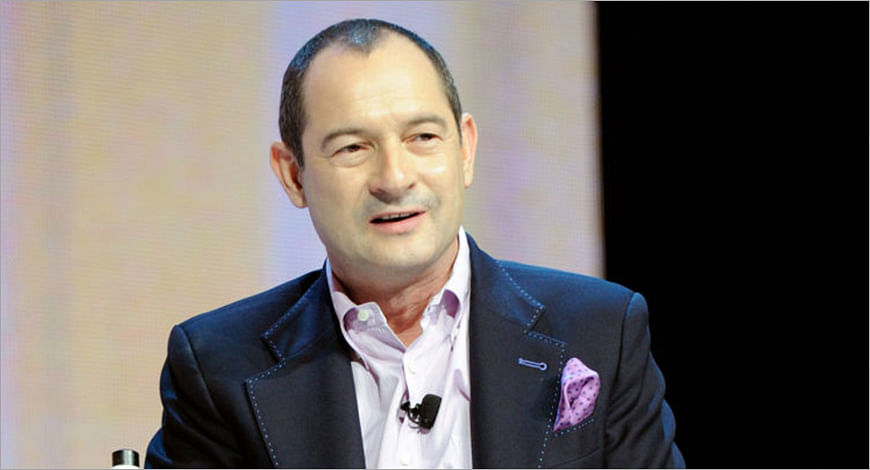
Addressing delegates at the International Advertising Association (IAA) Cabana, during the Cannes Lions International Festival of Creativity 2016 in a special session held by Hindustan Times, GroupM’s Global Chief Digital Officer Rob Norman stressed upon significant issues in managing supply chain in digital media.
“Everything boils down to an interesting notion - what presents an authentic opportunity? Every advertiser, when he spends money on an impression or on any other unit of advertising has the legitimate expectation that the publisher will be one in which the advertisement is seen by a human being for at least a feasible amount of time, and not by a robot or a fraudster,” he said.
What is a legitimate opportunity is not entirely a consistent notion, the speaker said, “because if you are looking at something and it is static on the screen for a given time, it is easy but if you are scrolling with your thumb at 500 pixels per second, which is often the case in feed-based environments, the mere fact that something passes through a viewable window may or may not be determined as legitimate opportunity. So working on the forward regulation and the commercial agreements around viewablility on a platform-specific basis is a huge priority for us.”
In his view, everyone in the supply chain has their own set of responsibilities. While the publisher has the responsibility of providing authentic opportunities, the advertiser has the responsibility to grow the propositions around the products and services that are of relevant value to the consumer. The creative partner, in all of this, has the responsibility of taking that proposition and making it compelling and sufficiently arresting to consume and the media agency has the responsibility of placing it in an environment that is fit for the target that it offers value. These are the fundamentals for digital advertising.
Does that require a different set of behaviour in the ecosystem between the stakeholders? While in some cases it does, he feels there are cases where it is in fairly perfect harmony. "Only by briefing (stakeholders) together can there be a harmonious implementation of the plan, and an equally harmonious attribution plan that allows you in setting an objective, defining a fit-for-purpose media placement," he said.
Touching upon the subject of ad-blocking, Norman explains that there has always been a covert contract between the publishers and users of the content - if the user does not want to pay directly for the content then he has to tolerate the amount of advertising for which he may or may not pay attention to. However, with the rise of the ad blocking software, the covert contract gets broken and the user of the ad blocking software chooses not to participate in that contract by blocking the monetization mechanism of the publisher.
In order to resolve this problem, the publisher either has to create content of sufficient value, which people will accept, with the ad blocker turned off or build a greater value by turning into a monetization model from advertisement-driven to subscriber-driven. Norman further stressed upon the need to create advertising assets that are not just compelling but “thumb-stopping” creative.
Responding to a point regarding video consumption patterns on mobiles, Norman pointed out that the lag in adoption of 4G technology has affected video consumption in various parts of the world, particularly India. Giving the context of the Indian market, Norman explained that the only app that works on the 2G platform is Facebook since it has been built fit-for-purpose by downgrading many of its features that could mar speed. Issues such as buffering of video content existed on 3G platforms as well and that 4G has been introduced only in some parts of the country.
Q.
Read more news about (internet advertising India, internet advertising, advertising India, digital advertising India, media advertising India)
For more updates, be socially connected with us onInstagram, LinkedIn, Twitter, Facebook Youtube & Whatsapp
 Share
ShareArun Iyer, Chief Creative Officer, Lowe Lintas
“Go to a pitch with your point of view, not necessarily what the client wants, because at the end of the day they come to you because they want your thinking,” believes Arun Iyer, Chief Creative Officer, Lowe Lintas.
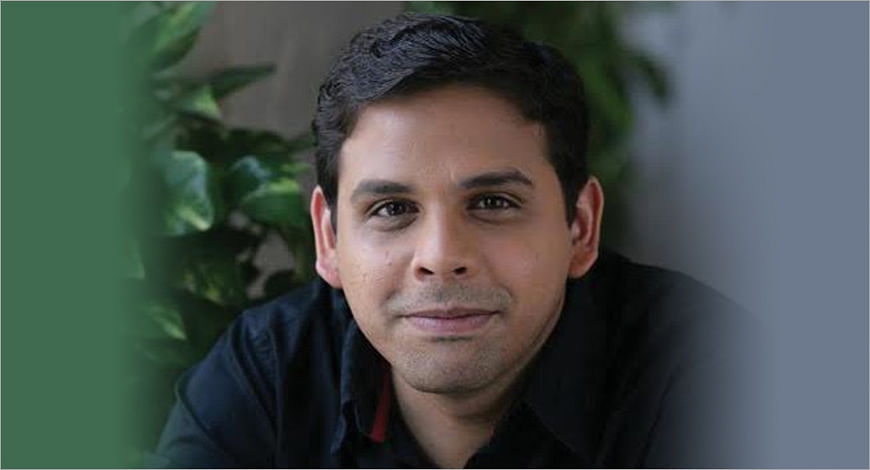
“We don’t carry options for pitches we go with a point of view, we strongly feel about, which is also why about 80 per cent of the pitch work is actually the first piece of work that we do for a client,” he shares.
Iyer, who took on the mantle of CCO last year, was earlier joint NCD with Amer Jaleel. As CCO, he believes one of his jobs is to make sure that while today is good, the next six months are lined up well.
The agency has consistently been in the news be it for kick-starting the year with its winning performance at the Effies or its recent work on Google’s photo feature that is being widely shared.
“I would like Lowe Lintas to be seen as an agency that a client would want to go to because they want a good idea on their brand which is medium agnostic,” adds Iyer. The world is headed towards ‘hyper-bundling’ (with clients are getting tired of handling multiple agencies) he believes, even as lays emphasis on getting mainstream teams to think digitally.
A candid Iyer shares his views on correcting the perception about Lowe just being a TV agency, why the move from NCD to CCO was not a dramatic one, what prompts ‘Ghar wapasi’ at Lowe, why he thinks there is a lot of ‘gas’ around ‘digital’ and more …………
Edited Excerpts-
Q. What are your expectations from Cannes for Lowe Lintas? We don’t enter from India so some of our work maybe entered from our global offices. My guess is that Lifebuoy Chamki entered by our Columbia office will do well at the awards.
Q. When you say ‘well’, it translates to Gold, Silver, Grand Prix? To be honest, I don’t understand that game too well, but I have feeling that it will be Gold.
Q. What are the changes that have been on your agenda as CCO? I am personally working very consciously towards correcting the perception about Lowe just being a TV agency. Chamki is a step in that direction, what we did for Paper Boat with ‘Hum Honge Kamyaab’ is a piece of content. Again what we have just done for Google Photos is actually content, there are many more things in the pipeline.
TV is still important and we do a lot of TV but somewhere, the world needs to start recognising that we are an agency that comes up with big ideas and that they sometimes happen to be led by TV. Even if you take for instance Tata Tea’s Power of 49, it’s actually a far bigger idea than the television commercial we created. But somehow the world still considers us only a television agency. That’s been the big shift that I have been working consciously on over the last one year.
I am not trying to change Lowe Lintas; I am trying to reach out to the world and actually tell them what we do, which is that we come up with ideas that are beyond television.
If you take Kissanpur, it is an idea that was born in our agency and the fact of the matter is that Kissanpur manifested itself in one TV commercial, and a whole bunch of forms like a huge activation idea, we have, in fact, created a great platform for the brand, and on the back of which we won global effectiveness awards.
Q. What are the challenges you face currently? The biggest challenge is to drive consistently good work. I think it’s a huge challenge because the only way to do that is to empower your people, align with the kind of stuff we need to be doing, and communicate clearly that this is the level at which we need to operate. Set a base level and let nothing drop below that - which is a continuous challenge. The only thing I worry about, fuss about and I keep telling my teams is; what’s coming up? What can we do better?
The challenge is also to continue the great creative culture that we have. To be honest, I have been really lucky, I have got really great people a really great team - the creative heads including the creative team.
Q. Do you think there is an over-emphasis on digital these days? Yes, 100 per cent, whilst digital is important because the mobile phone is transforming our country, and we cannot run away from that, but the noise around it in our industry is a lot of gas around this word ‘digital’.
Somebody needs to cut through it and get to the point of what is it that needs to be done. And that is what we are attempting to do with Linteractive’s new framework Deep Digitisation, which we have been working on since the last eight months.
We are trying to not let the clutter get to us and see how we can genuinely transform into an agency that thinks well digitally.
Q. How has this one year been for you? It has been exciting because we took the opportunity and we were confident enough to think that we can actually start another agency; it was a big call at that point of time.
The good part is that Mullen (Lintas) is doing very well and I think they are doing some nice work. This one year has been very hectic but we have managed to consistently put out work that has generated enough conversations for the agency, we have managed to put out great work, and create a culture that people want to belong to.
In fact, we have a term that people joke around in the agency called ‘Arre iski bhi Ghar waapsi hogayi’; there are so many people who have left us and who have pretty much come back soon. One of the things I am quite arrogant about is that when people go out of our system, they realise the value of our system.

Q. How has it been on an individual level? I have spent lesser time than I would have liked with my family but they have been supportive enough. I know the Mumbai Airport better than anybody in the city right now. It’s been a lot of travel but what I have absolutely enjoyed the most is, working with a lot of creative people and that number has increased a lot more now. For me, the trip in life is to actually sit and jam with creative people and come up with solutions and I have got more opportunity to do that so, it’s absolutely fantastic.
Q. You have been with Lowe since 2003, how did things change for you from NCD to CCO? I joined as a copy writer in 2003 and I have grown through the ranks.
When I became NCD in 2010, it was a dramatic shift for me. There are three levels between GCD and NCD. Balki picked me and said sit here, so I skipped three levels to run one group in the office on the 13th floor and suddenly, I was running half of Bombay, all of Bangalore and Chennai. So, that year was dramatic in my life. Since I have worked for six years as NCD, this was a smoother transition.
Q. You never wanted the option of running Mullen? That’s actually a conversation between Balki(Group Chairman of MullenLowe Lintas Group) Joe (Regional President, South & Southeast Asia, Group CEO India, Mullen Lowe Lintas ) me and Amer (Chairman & Chief Creative Officer Mullen Lintas) and it was a good three-four rounds of discussions until we came to a consensus on the structure we want. So, it wasn’t a diktat or a personal decision, we sat together and we said, okay, this is what is best to do.
Read more news about (internet advertising India, internet advertising, advertising India, digital advertising India, media advertising India)
For more updates, be socially connected with us onInstagram, LinkedIn, Twitter, Facebook Youtube & Whatsapp
Rana Barua and Ashish Chakravarty, CEO and CCO, Contract
In a freewheeling chat, Rana Barua and Ashish Chakravarty, Contract’s CEO and CCO respectively get talking on the agency’s recent wins, which include ITC Personal Care, Century LED bulbs, Abbott Healthcare, Lupin OTC, Orient Fans, Reckitt & Colman, Garnier among others. Contract has also won the mandate for mygov.in, one of the largest mandates from the Government of India. <br><br> The duo field questions on receiving offers from other agencies, what is a compelling offer to them, taking Contract to the next level why clients are willing to wait for the agency today and more
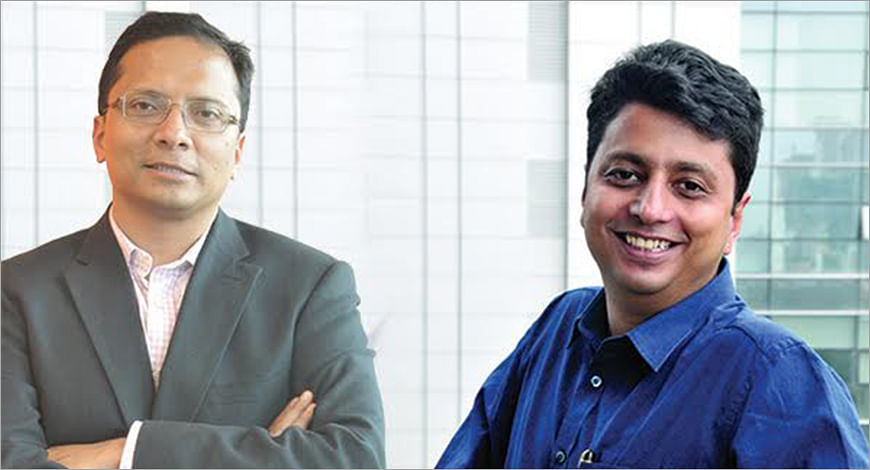
The duo field questions on receiving offers from other agencies, what is a compelling offer to them, taking Contract to the next level why clients are willing to wait for the agency today and more
“Singularly or as a team barring two or three very obvious network agencies, everyone has made an offer at some point or the other,” says Chakravarty in a matter-of-fact manner.
Given their team work and working equation, ‘if’ they ever considered moving out, would it be as a team? Together would be an ideal scenario agrees the duo, but the offer has to be compelling enough.
And what makes a compelling offer for the duo? A compelling offer would be a large network, a solidly creative, global kind of entity coming into India, something that is a bigger challenge than what we have achieved, say both unanimously.
Barua joined Contract in 2013, Chakravarty came on board a couple of months later.
Chakravarty makes an interesting observation on one of the differences about the agency today.
Q. There were rumours that you were moving on from Contract; what is your take on that? RB: Conversations keep happening. There was never intent of either looking out or moving out, and there still isn’t. There were also a lot of non- committal meetings with people who I respect and are friends. Was there a genuine desire to move out? Not yet.
Q. When Cadbury moved gums and candy to Saatchi and Saatchi, there was a perception that the Cadbury account moved out of Contract….. RB: Cadbury’s Celebrations is the local jewel, which stays with Contract because we have built Celebrations. Celebrations was started by Contract, the relationship is that old, the brands that have moved was due to pure global re-alignment.
AC: Our relationship with Cadbury is very deeply embedded, I believe Celebrations is the only brand in the world where gifting has been successful. Our Eid film was successful not just for Celebrations but for the entire range of Cadbury products, giving it a very good spike.
Q. In an industry where agencies are judged on their creative product, how has the agency’s creative offering evolved to suit the changing brand dynamics? AC: We have instilled an entrepreneurial spirit into the system. While there are different departments, we are all in it together - it’s a business to do shining work for the client.
It is not about individual glory but how to leverage creative as a tool for acquiring business. That reflects in the way we work. We have changed the entire rules of working on a client brief; we have people from all departments on the deck solving the issue of a client using the different tools available - that’s the spirit of a start-up, that’s an e-commerce scenario where individuals are not separated by departments. To a degree, we ascribe our success both in business and in creative to this spirit that we have in Contract. It’s about solving a business problem using creative, and therefore, beneficial both for the client and business.

Q. Given the equation between you two, no power camps at Contract? RB: We work in alignment and alignment is that common goal that both of us have set for each other.
Power camp kind-of conversations are likely to happen when both take independent calls but because of our alignment, you see the same percolating down the line at least 80 per cent in the agency, which is fabulous.
AC: Since we are aligned, what is happening across the agency and departments is that people are looking out for each other; it is not one against the other. If the other person has failed and I am gaining joy out of it then something is wrong. Wherever that happens, the agency is going to get crippled. That has started to flow and it is not across departments, it’s across geographies. You know that you are winning as a team or you lose as individuals. I think that sense has gone down. It’s not magic, it’s just that you put a set of people with a common purpose and then they align over a period of time.
Q. When you took charge at Contract, your initial focus was to stabilise the ship, then you went aggressively after new business, where is the agency at now? RB: What we managed to do with Contract is to make it a far more stable ship. If you look at the number of people who came on board in 2013, including me, Ashish and many of them, including many senior people and individual talents. They have got multiple offers but have stayed together. Secondly, if you look at the number of clients that have come on board and stayed with us, it’s a massive list of people who have invested in Contract. Without naming any agency, there are so many of them that are struggling to find a footing. Our conversation with clients is about creative effectiveness, product, planning - it’s a very different conversation. So, if you ask me if the mission is over, I would say, no. There are many categories that are open to Contract, there are many clients who are talking to us, and there are many more things we can do if we want but it also matters on our bandwidth.
Q. So are you saying no to pitches/ new clients if the bandwidth doesn’t permit it? RB: In many instances clients are ready to wait for us…
AC: Our first priority is to our existing clients..
RB: If we go for a pitch we go for a win. A lot of heartache goes into pitches and a loss is demotivating for the entire team, so there is no point just going for the heck of it. Also pitches we go into today are of a certain size and scale, let me put it this way, we have been going for pitches with the top few agencies in the country.
AC: If there is an urgent requirement, we excuse ourselves if there are bandwidth issues. Also a lot of what happened and worked for us last year was when a client approached us, we showed them our work and the team who would be working on the account and asked them to work with us without a pitch, in a whole lot of cases we were able to work on numerous projects in the manner.
Q. Any reason for the silence since the last one year? RB: There are two or three reasons you talk; when you need to, when you need a lot of attention and when you need to make a conversation. Right now conversations, attention and a lot of engagement is happening on its own. Whether it’s with clients, whether it’s with people, a lot of things are happening. There is no particular reason to come out and say something which requires any kind of eyeballs for us. Our work is speaking for itself.
Q. What would be some of the focus areas for you going forward? AC: I think it would be to up the ante in some of areas like design. The other would be newer forms of engagement.
Read more news about (internet advertising India, internet advertising, advertising India, digital advertising India, media advertising India)
For more updates, be socially connected with us onInstagram, LinkedIn, Twitter, Facebook Youtube & Whatsapp
Charles Courtier, Global CEO, MEC
MEC’s Global CEO Charles Courtier gets candid about not playing the under-cutting game, why more regular pitching is the new normal after the ‘Mediapalooza’ of 2015, take-aways from as well as focus areas for MEC India
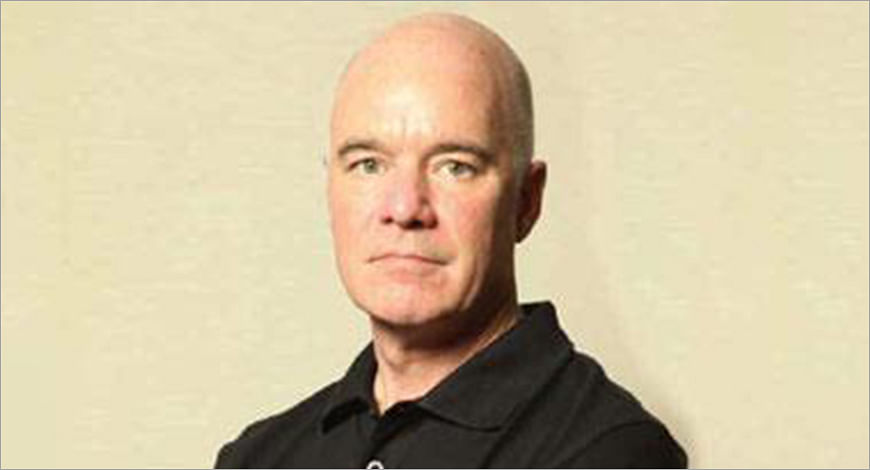
The agency globally saw a double digital growth last year (above 10%), which in 2015 was a very good performance, feels Courtier, even as he says that it is a bit early to comment on the agency’s performance this year.
Courtier declares that the overall view around India is very optimistic and global leaders continue to have faith in India as a fast growing market, more so, because growth in China has started to slow down, making the gaze on India more pronounced. On digital, Courtier believes it is just a matter of ‘speed’ at which digital takes over the Indian market, when comparing it with global markets like the US, Europe and even China to some extent, rather than ‘when’ it will take over.
Edited excerpts from a conversation Charles Courtier had with Priyanka Mehra:
Q. Are we done and dusted with the craziness of last year's ‘Mediapalooza’ wherein an extraordinary number of big clients put their accounts up for global review at the same time? I don’t think it is done. But you are right... it was crazy, and if I were a big client, the last thing I would do now is pitch my business, because how on earth would I get the best out of any agency when they are drowning in these enormous pitches? Having said that, I think much more regular pitching is the new normal. And I don’t think it started in 2015 - I think we are quite used to pitch and re-pitch of businesses on a very regular basis and that’s going to continue. It might not be 2015 every year, but I think we will continue to see a lot of media pitches every year.
Q. What are the possible reasons for this, in your view? I think there are two key reasons. One is procurement, because companies and businesses are all under tremendous pressure, and the media number on the balance sheet is a very big one in most clients’ businesses. So, procurement is a fact of life, it is very important for these companies to get the best efficiencies and value that they can for the money they are spending. Procurement is competitive from a pricing point of view. The other side of it, to some degree, is fear in the sense that the communication business is changing so massively, that I think clients want to test if the agency has the right skillset to navigate them strategically through the chaotic, difficult and fast-changing media world driven by changing consumer preferences. Marketing is changing so fast; if you are a CMO in a big company, you know it’s hard to keep up with everything that is going around. The way the consumers are buying your goods or entertainment is changing so fast that the CMOs in that situation need to know, and they want to check that the skills they need are there.

Q. How do you deal with under-cutting, especially given the added pressure of significant global pitches and a cut-throat competitive scenario? The only way to deal with it is responsibly. We have to be competitive on price. Yes, there are situations where somebody does something crazy and you get under-cut; yes, everybody has a story of when that happened. But honestly, if you get into that game, it’s a very short-lived game; don’t think you are doing your client any favour because you can’t sustain under-cut prices. In the end, you have to be responsible in terms of pricing that you are putting forward; you have to deliver it over a long-term basis. So to answer your question, we won’t play that game.
Q. What are your focus areas for India from a global perspective? Digital is key, because I believe it is the tipping point and India is on the cusp of that. It is all about ensuring we are ahead of competition in terms of our digital and our data capability. So, absolutely that is the priority, because we can see the wave of opportunity about to come so we have to be ready for it. The business has grown fantastically over the years and has great opportunity. You have to have talent to manage that growth and also to sustain that growth. The development and diversity of talent is another key focus area; growth of talent is equal to growth of the business for us.
Q. What would you like to take from MEC India to MEC globally? India is a very entrepreneurial country. When we look at MEC here, in comparison to MEC globally, there is a real tough entrepreneurial spirit in India. And if I could take that, box it, move it and export it around the world, I would.
Read more news about (internet advertising India, internet advertising, advertising India, digital advertising India, media advertising India)
For more updates, be socially connected with us onInstagram, LinkedIn, Twitter, Facebook Youtube & Whatsapp
Sajan RaJ Kurup, Founder & Creative Chairman, Creativeland Asia
Last year was an eventful year for Sajan Raj Kurup Founder & Creative Chairman Creativeland Asia, a visibly exhausted but spirited Kurup gets candid about why industry do’s are ‘unexciting’ for him, why staying away from Goafest has added to the agency’s culture and focus, expanding operations beyond India, Why charging a pitch fee still works for CLA, his thought process behind work for Micromax, and life after Parle Agro.
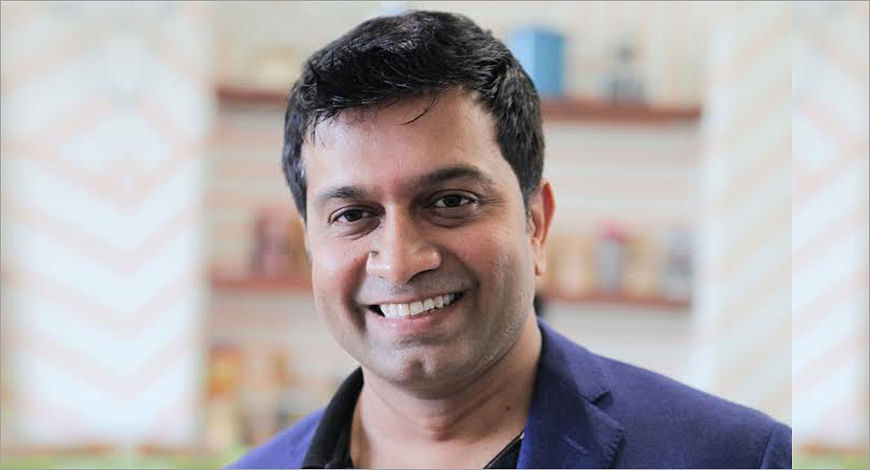
Q. What is the insight behind the new logo and tagline—‘Nuts: Guts: Glory’ for Micromax? Nothing symbolizes a cultural revolution in an organization as much as a change in identity. This exercise wasn’t about redesigning a logo and writing a tagline. It was about capturing the Micromax culture. For this we studied the Micromax story of four guys taking a brave decision to risk it all and enter the devices market. We traced their journey that started evolving from the back-alleys of the mobile phone revolution in India and all the way up to the global scene. We sat and understood the personalities of the founders, their ambitions and plans. What stuck out for us was a sincere amount of audacity. So, for Micromax, we created a line that establishes the innate desire for audacious and unconventional victories. And decided to scribe it as ‘Nuts: Guts: Glory’ in an unconventional slogan of sorts.
Q. The new campaign is completely different in tonality and positioning, and definitely more aggressive, was this the brief given to the agency? The most defining characteristic of this generation is the admiration for (and a desire to emulate) the crazy and the brave. To not just win, but to win big. To make irrational decisions, and to win madly. This cultural fuel becomes meaningful for us when it connects with the Brand Ethos.
In many ways, Micromax embodies this spirit we see coursing through the veins of the nation.
Anyone who has followed Micromax closely would know that the brand has an audacious story of how it was born in the back alleys of the mobile revolution in this country and has propelled itself on to the global stage in less than a decade.
Micromax is clearly an unconventional winner brand. It is a brand that’s taken chances, fought off much larger, more reputable competitors and still managed to come out in the driver’s seat. It has a sheer bloody-minded will to succeed.
It’s brash, bold and defiant .Which is why it goes for it. It’s why it doesn’t do things in half-measures.
Q. What does the campaign aim to achieve? A large part of the campaign objective is also to break a de facto price ceiling when it comes to how the brand is perceived and to align the cultural fuel and brand ethos with the new brand philosophy of ‘Nuts: Guts: Glory’ for its next phase of growth.
Micromax’s ability to premiumize itself lies in creating more meaning around what the brand stands for, its philosophy, how it sees its story, how it sees its users and how it delivers across the entire user brand experience.
Q. Do you have any plans of expanding operations beyond India? Yes, we have already incorporated an entity in Singapore. We have been studying various strategic overseas markets for the last three years now. We have already started engaging with brands in some of these markets. Slowly but surely you will hear more about our expansions beyond India.
Q. You are now a rarity at industry do’s as well, is this a result of the over hyped loss around the Parle account or is this a conscious effort on your part to stay away from the advertising industry? The Parle Agro- CLA split affected the industry gossip mongers more than it affected Parle Agro or Creativeland. We have moved on to business as usual. People who know me have learned to ignore the over-hype or gossip. It has nothing to do with being a rarity at industry dos.
Look, I am terrible at befriending, small talk etc. And, I don’t even drink alcohol any more. So, I don’t know what to do there once I get there. Also, instinctively, I can be quite politically incorrect and blunt. So, it would be kind of dangerous and not so exciting for me to be at all these ‘industry dos’.
I am better at focusing on what I am good at and what I enjoy.
Q. What are your thoughts on the new Frooti brand campaign? I’d prefer to pass this question.
Q. CLA charges a premium, at the same time you refrain from pitching how does this work in the real world? Creativeland doesn’t undercut itself or others. More times than often, we have won mandates despite of not being the L1 on cost at the procurement desk. We believe in creating great value for our clients and ourselves. We handpick our client partners as carefully as we pick our talent. It has been almost 9 years of Creativeland and every single year we have successfully delivered on setting benchmarks in every category we have brands to work with. Over the years, we have more and more clients inviting us to pitch and paying us a pitch fee for it. Every time a potential client says, “We are very excited to have you pitch and we are very keen to see the Creativeland perspective” I know the value the decision of sticking with a pitch fee has created for Creativeland.
Q. You haven’t participated in Goafest for 4 years now, 2012 was the last time CLA participated. Will we see CLA back at Goafest? The years we participated in Goafest, we have won big in front of a full house of participants. We have won big in competition with strong organizations like Ogilvy. Especially in the film and integrated campaign categories including the integrated grand prix in 2012. But, some of us also saw some amount of ganging up against winners, lobbying and alarming levels of scam ads by agencies desperate to win. Since we have a clearly different point of view on how awards must be conducted and instituted, I decided to step away. We haven’t missed being at the fest even once. In fact, staying away has added to our culture and focus.
Q. Coming back to Micromax, is this the first campaign that CLA has worked on, for a global audience? We have had several instances in the past when our campaigns have been used in overseas market/global audience. Audi, for instance. A lot of our work was considered and used in the Asian and European markets. The work we do for a lot of brands at Godrej gets used across the SAARC countries. Even as we speak, there are a few more global initiatives Creativeland is in the midst of in Africa, EU and US, apart from Micromax of course.
Q. Is this a very different task from some of the others that Creativeland has done for brands in the past? We’ve had invaluable experience of dealing with premiumization challenges across different categories.
We successfully repositioned Cinthol from being a popular segment soap to being at the premium end of the bathing soap category, making it a youthful and gender-neutral brand in the process. We did this by telling young India “Alive is Awesome.”
We re-positioned MTS from being a lower SEC, voice-driven brand for price-sensitive customers to becoming a data-focused brand for the digital youth of today, who consume gigabytes for breakfast.
We made MTS the definitive telecom brand for “The Internet Generation”, significantly growing its ARPU in the process. While these categories may work differently from each other, there’s no denying that building a consistent, meaningful brand identity and philosophy is key to capturing the hearts and wallets of contemporary, young India today.
And as this category slides further into parity product problems, brands will need to start differentiating themselves based on personality, based on how they make consumers feel about themselves, and how consumers identify with their beliefs.
Read more news about (internet advertising India, internet advertising, advertising India, digital advertising India, media advertising India)
For more updates, be socially connected with us onInstagram, LinkedIn, Twitter, Facebook Youtube & Whatsapp
Carter Murray, Worldwide CEO, FCB
Carter Murray, Worldwide CEO, FCB, talks about his expectations from Rohit Ohri who will don the role of Group Chairman and CEO (India) in January this year, speculations around talent moving from Dentsu to FCB. He also reacts to speculations around Satbir Singh, and talks about reasons for not wanting to make any revolutionary changes in to the agency in India. Excerpts:
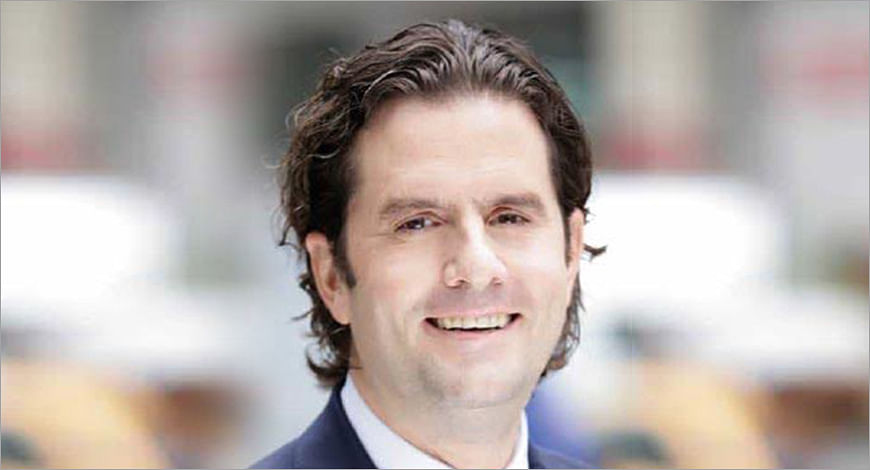
In an interview with Priyanka Mehra, Carter Murray, Worldwide CEO, FCB, talks about his expectations from Rohit Ohri who will don the role of Group Chairman and CEO(India) in January this year, speculations around talent moving from Dentsu to FCB. He also reacts to speculations around Satbir Singh, and talks about reasons for not wanting to make any revolutionary changes in to the agency in India...
Q. Are there key areas that the industry needs to work on from a creative perspective? There is opportunity in art and design, to elevate the level of advertising. With creativity you have to take lateral leaps and I think there’s a cultural environment in which we can do that even more here.
Q. What is your reaction on the speculation regarding Satbir’s ( Satbir Singh, Chief Creative Officer, FCB) exit? This is unhealthy gossip which is being spoken about which is untrue, of course there is gossip when a large company appoints a CEO, but it is unhealthy and unfair to the people who come to work everyday, We are in a talent business and we need to treat people with respect. Satbir is a really creative guy and really respected and it is unfair that people are saying that. Rohit who is the new CEO coming on board is a grown up, a good leader and he will give everyone a chance.
As the Global CEO, I will, like for any new CEO, after 90 days, come here and ask for a plan and assessment of the team. We’ve put in place a rigorous HR so we know exactly where people are. So if he feels they’re in a different place then he will have to explain to us why. When you are in a talent business, there are checks and balances in place to make sure great people are taken care of.
Q. How are you working to ‘up’ the agency’s creative quotient in India? I have very big ambitions for FCB Ulka. With Rohit coming on-board along with some of the creative talent we have already, my challenge to them is how we can help our clients and work together with them to raise the profile of India on a global stage in the industry we are in.
Most countries have a belief, probably partially correctly that they have a rich vein of creativity and a right to be in the forefront of creativity. India is one of the few countries that has a natural birth-right for creativity and has a right to play a much bigger role on the global stage but I don’t think India does it nearly as much as it can currently.
Q. What is the mandate given to Rohit Ohri as Group Chairman and CEO? There are certain goals that I, as Global CEO look to deliver and I expect the same from all other CEOs including Rohit. One is to be able to retain and attract the very best talent in the industry. Through his leadership he needs to create a culture and ambition to attract and keep key talent.
He should have energy and passion for the creative business. Sometimes our industry follows trends, which is understandable but the core of what we do is creative work.
I am excited about Rohit coming on board because he is the right influx of talent and will give the right perspective to the team we have here and take Ulka on the next step of its journey. It is very different from a reinvention where you bring a team on board to completely change things. That’s not we have here. Here we have a successful agency and a strong culture.
Rohit is going to bring fresh energy and perspective to what is already an experienced energised team.
Q. Will we be seeing a lot of movement of talent from Dentsu to FCB? I have heard of a lot of speculation around this, but it’s untrue. Rohit needs to come onboard and see what the team is here. I assume he might want to bring one or two individuals onboard with him. Speculating on what Rohit will do is unfair to him.
Q. Which other Indian agencies do you see doing good work in your view? I think Lowe and Mcann have had a good reputation for a long time. We mainly look to our sister companies for competition. There are also one or two boutique companies that have started, from which I think more and more of the competition will come, in the future.
Q. What do you want to change on the business front in India? For this market we are not making crazy margins but we are making fair margins. I want to grow but I don’t have any revolutionary ambitions or desires. I don’t have any pressures to double the size of the margin because if I push the margin too far I’ll start to destroy the company. I want Ulka to keep its size and scale. Yes, I do want to keep growing but I want to do that by focusing on the creative talent and product. A lot of the holding companies and networks today have been pushed into putting the numbers first.
Read more news about (internet advertising India, internet advertising, advertising India, digital advertising India, media advertising India)
For more updates, be socially connected with us onInstagram, LinkedIn, Twitter, Facebook Youtube & Whatsapp
Vikram Sakhuja, Equity Partner and Group CEO, Madison Media Group (including OOH)
“All media agencies today are gearing for change in an environment of digital, data, and technology. This is potentially changing the way we target, work seamlessly across media, deal with a connected consumer and deliver outcomes. This re-engineering, if you want to call it that, is as applicable to Madison as it is too any other agency. I hope to play my role in being a catalyst of change”
The news of GroupM’s Vikram Sakhuja joining Sam Balsara’s Madison Media Group including OOH as Equity Partner and Group CEO took the industry by storm in April this year.
In his new role, Sakhuja will be responsible for the Media and OOH business of Madison World. He will work closely with Sam Balsara.
Interview
In a brief chat with exchange4media on his first day at Madison, Sakhuja a highly respected name in the media industry, talks about his expectations from Team Madison, his excitement on working with Sam Balsara, who he has known for over two decades now.
Sakhuja also answers the question on speculations over the possible movement of talent as well as clients from GroupM to Madison post his move, in his own inimitable way.
Excerpts:
Q. You have known Sam Balsara for over two decades now in your various roles as a client and a formidable competitor. What are the advantages of your partnership, despite the perceived difference in leadership styles? Sam is a great dealmaker with an exceptional commercial acumen, and I have a decent strategic mind with a good record of growing business and organizations. Both of us believe in client-value and we both have more than a decent network in the media marketing ecosystem. I’m excited about teaming up with someone I’ve respected and admired for over two decades. I hope for starters to rub off some of his amazing energy and spirit on to me.
Q. You have been a digital evangelist at GroupM and Maxus. What is your approach and strategy towards bolstering Madison’s digital offerings? I have just joined today, so it would be presumptuous and premature to talk of a digital strategy now. Suffice to say for now, I believe in digital being a specialism that needs to integrate into the overall plan rather than work as a silo.
Q. In a recent interview with exchange4media, Dominic Proctor (President, GroupM Global) said “Madison has a fine heritage and clearly needs to re-engineer for the future. I guess that's why they have taken him on” on your exit from GroupM and joining Madison as Equity Partner. What would you like to say about his observation on the need for Madison to re-engineer for the future? All media agencies today are gearing for change in an environment of digital, data, and technology. This is potentially changing the way we target, work seamlessly across media, deal with a connected consumer and deliver outcomes. This re-engineering, if you want to call it that, is as applicable to Madison as it is too any other agency. I hope to play my role in being a catalyst of change.
Q. What would you like to say about speculation on the possible movement of talent as well as clients from GroupM to Madison post you taking charge at Madison? If you’re trying to flatter me into thinking that my old friends might want to follow me, you are succeeding. The truth is that talent are looking for growth in four areas: exciting work, personal and career growth, an organization and leaders they can look up to, and economic wellbeing. Good organizations that focus on these normally don’t worry about flight of talent.
Q. Is building on ecommerce business also going to be an area of focus for you adding on the Snapdeal business? Agencies learn from all their clients. ecommerce is clearly a sunshine industry with great momentum. One, we can learn much from – especially the always on, real time nature of business and the link between cause and effect. That said, traditional businesses bring a huge foundation of consumer marketing skills. So short answer is that all sectors require focus, including of course, ecommerce.
Q. You recently said you might bring in to Madison the culture of setting ambitious targets and trying to achieve them, do you think the agency needs this more now with the recent loss of Mondelez (on account of a global pitch) and Airtel at earlier this year; both of which are significantly large accounts. What is your strategy towards Madison regaining lost ground and going on to new heights? The context of that comment was the difference between MNCs and local companies. MNCs of which I have been part of are more target-driven than local companies. My philosophy on targets is really one about objective setting. My conviction is that if managers are clear about deliverables, they are also smart enough to achieve them. On Madison strategy, I am hardly likely to reveal it, especially on my first day of joining.
Q. While we have covered extensively what is it that you would like to change and strengthen within Madison. What are your expectations from Team Madison? To have a passion for making a difference to our clients’ brands, and to enjoy what they do.
Read more news about (internet advertising India, internet advertising, advertising India, digital advertising India, media advertising India)
For more updates, be socially connected with us onInstagram, LinkedIn, Twitter, Facebook Youtube & Whatsapp