

Andrey Purushottam, MD (India), Starcom Worldwide
"We always approach a problem as a business problem and try to chalk out the business strategy that should be adopted, the way it could be translated into marketing objectives, and then decide the media objectives."



"We always approach a problem as a business problem and try to chalk out the business strategy that should be adopted, the way it could be translated into marketing objectives, and then decide the media objectives."An ardent bridge player, an excellent public speaker, a director and an actor who's worked in a number of plays, a writer and a teacher - one could go on and on about Andrey Purushottam, the MD (India) of the world's fourth largest global media company- Starcom Worldwide. When Avinash Sahu of exchange4media met with him with the objective of trying to learn more about the media scenario today, the sheer depth of information that came out was mind-boggling. (We don't need to give you the proof of that; as you read through the interview you'll find that for yourself!) With Purushottam's experience, which ranges from launching Asiacontent.com, to advertising and marketing at Lintas and Unilever, to heading Initiative Media, and now Starcom, one can expect the unexpected. Read on and unveil the Indian media with us... Q. Lets start by looking at the current advertising services environment. What do you think is happening here? With all this unbundling of services, are some issues cropping up?
What we try to bring to the table is a comprehensive view point which says that if we adopt X strategy or Y strategy, if these were the kinds of media we used, this was the scheduling we did, this is the kind of creative run by us, this is the kind of creative used by the competitors then this is the reason why these scores are moving up and down. Today a client typically has an interface with a whole host of other parties unlike the market research agency. The market research agency is only concerned about the image scores and not about other things that relate to the client. Typical media agencies are concerned about reach, OTS, innovation and rates and so on and not about the marketing paradigm.
We believe that since media is typically the largest source of investment for the client, we should take custodianship of deliverables along with the client, which means that we don’t see our deliverables as being only reach, OTS, rates, innovations, etc. We see, jointly with the client, deliverable as things like awareness, purchase intent and also sales, market shares etc. What I want to pursue are two things - one is to include this thinking in all our media presentations to our clients, and, secondly, to put our money where the mouth is and press for remuneration practices and evaluation practices with our clients, which give us certain incentives towards the payment of client holds.
Q. You have been a non-media person, how has been the transition to head one of the best agencies in India?
Q. Advertising agencies today are held accountable for all media decisions. Shouldn’t the media owners also be accountable to a certain extent?
Recently channels like Zee and Star Plus have resisted guaranteed audience delivery. The reasons could be that they are not sure about their future and therefore don’t want to link and risk their revenues, or that they are strong and therefore don’t need to guarantee deliveries.
However, I believe that over a period of time, the thinking has to change. This thinking could only be facilitated if the situation is fair to the media owners. For example, there are seasonal fluctuations in demand and supply. So, rather than just keeping cast iron rates, the media can have flexible rates. For example, during monsoons, advertising is lower as compared to Diwali. Therefore, lower rates for the monsoon period are more logical.
Q. Is fragmentation in media becoming a major issue of concern with the clients?
Another issue that is of concern to the clients these days is innovation. Clients expect us to innovate and there is much sense in that because that is one way of beating fragmentation. Innovation exists in the entire chain of the communication process and is not just the final gatefold. If we are able to offer innovation to our clients at each and every step, we would be able to make much better use of their money, which is certainly the need of the hour, given the fact that top lines are not increasing fast enough. We are in the process of launching a new mantra with the title 'Fuelling Brand Power’, which essentially focuses on the brand and the consumer and also talks about innovation in the entire implementation process. This is an endeavor of ours to treat each rupee of the client as sacred.
Q. Clients are increasingly putting their money in below-the-line activities. Have above-the-line activities become too expensive or are they losing their effectiveness?
Below the line activities, if used excessively, make the consumer a deal maker rather than a brand loyalist. The concept of brand building has gone for a toss. As an industry, we are increasingly catering to the client's wants rather than client's needs. The creative agencies are creating campaigns, which do the job in terms of providing enough sales in the short term; they do not have any inherent loyalty towards the brands they handle.
Q. Would the Indian market be able to accept the trend that is taking root in the west, that the client pays its agency money according to the total sales? And if it does revert to such a system, how do you think the client should remunerate back?
It is fair to say that the decision variables, which lead to the final sales, are not limited to the components of the marketing mix. Advertising cannot be solely held responsible for sales. However, we have a system that is already in place with our client Procter and Gamble, and is in the process of discussion with our other key clients. According to the system, an evaluation scheme comprising key attributes relating to the process of what we call, excellent media planning and buying, is sent to the client. There are seven to eight variables, like inputs to strategy, inputs to market research, inputs to media plan, inputs to media buying and operational issues like account management, against which we have a seven-scale system. If we are in the middle of the scale, we get whatever fee or commission we are entitled to from the client. However, if we get a rating less than that scale, we get a disincentive and if we get rating more than the scale, we get an incentive, which is relative to performance.
The plus point of the system is that it recognizes the fact that an excellent process will lead to excellent results. Another plus point is that the agency's stake is not just defined in terms of outputs.
Therefore, we are not talking about a formula, which says that if Fiat sales go up by 15% then our commission also goes up by 15%. We are talking about a set of processes that would help Fiat to get that 15% increase in sales. When we did the market prioritization for the Fiat Palio launch, we spent a huge amount of time in understanding the geographical sector for the potential target audience for Palio and the potential areas where there was a possibility of upgradation of consumers. We tried to find out the best way to find the target group so that the most pin pointed media plan in terms of media efficiency could be achieved. We concluded that the consumers who owned washing machines are our potential buyers. Using this as a filter in the targeting process, we delivered efficiency through strategy and planning alone. This resulted us in delivering at least 15% to 20% more than what we would have done otherwise.
Q. How do you see TV as a medium evolving over the next few years?
The other trend is the proliferation of regional channels. The channel share of regional channels has also gone up. As far as the big three are concerned-Star Plus, Zee and Sony, I still see that in the short term the pecking order will remain unchanged. There are a few things which Zee had like the noew show JIKNH. Now whether that has the critical mass like KBC and associated programs to change the pecking order, I don’t know. The programming choices that Star and Sony are doing, seem to suggest that the pecking order will remain the same. But this is a strange world and I could be eating my words in 6 months time.
While on one hand the specialist channels are increasing their channel share, on the other side there is a sufficient amount of fragmentation amongst specialist channels and a lot of them are not making money. It is possible that some shakeout may happen. On one hand, consumer preference is for more variety but whether with so much fragmentation, the variety has sufficient business potential to survive is a key question.
Q. How was your experience at Asiacontent? What are your expectations from the Internet?
For any portal to be successful, it has to offer a high value product. Secondly, it has to be rational product, like housing loan rather than a touch and feel type of a product, which people are hesitant to buy on the net. Despite of all facts, Starcom has a most sophisticated presence in Internet called the Starcom Digital and we intend to stay there for long. I have a realistic view that the medium would possibly grow.
Q. Why are some clients rate obsessed? The only criterion some of them use for judging agencies is rates. Why?
Q. How is CAS going to impact the niche channels?
Once the initial phase gets over, the next issue would be that of pricing the channels. In the international scenario, there are tiers, which have separate rates. If the basic tier is say, Rs.X then the X + 1st tier will be 10-15% higher than the basic tier.
In India things may be a bit different. I feel, that the basic tier here would be priced quite low so as to create acceptance. This could actually lead to one of two things. Either some specialist channels that are under pressure would wither, or will experience a shift in their revenue model, which will go substantially in favor of subscription rather than advertising. This would also be a good development.
Q. Why is transparency important to a client and why are some agencies not transparent enough?
Some agencies however, are reluctant to be transparent because of many reasons. One reason is certainly greed. The amount of money that can be made by not being transparent is huge, and given the fact that our business operates on razor thin margins (the margin varies from 2.5% to 4% on commission basis), you can certainly understand why some agencies are reluctant to be transparent. Another reason is the Cultural Value; some agencies do it and some agencies don’t; it is as simple as that! Constantly lowering the benchmarked commission may be the third reason.
Q. How do you see media houses like MindShare, which have tremendous buying power and can therefore take advantage on some fronts? To what extent can that impact the market?
Q. How do you see radio as a medium, and for what specific objectives can it be effective? There is no third party data available on radio. In such a scenario, how do you evaluate different stations?
I certainly feel that there is a huge amount of scope for radio as a medium to grow. At the moment, I believe that the total spends on advertising on radio is less than 2% of the total spend. It's really very small. Yet, I'm a strong believer of radio for the simple reason that you can localize it if you like.
Q. In a situation where an agency might want to achieve long-term sales and long-term brand loyalty but the client may want to achieve short-term sales. What do you do?
Therefore, I have nothing against building short-term sales. Yet, the mechanism of building up sales only on the lines of consumer promotion is what worries me. Essentially I think, it would be beneficial for a media agency to recognize that there are circumstances, where certain kinds of activities can be advantageous to the client and also more cost effective in generating sales. For example, we decided to use 4000 shop boards rather than using hoardings for our client Kelloggs. It cost less, plus gave Kelloggs 10 times more visibility. If, as an agency, you believe that you want to maximize the client's result, you would try and find the most cost effective solution for it. You will also not be a slave to any preset notions regarding any kind of media, below-the-line activities, or above-the-line activities.
Q. What are the strategic and planning issues that Starcom tries to address apart from regular planning job?
The second area that is fundamental to the strategic process is to first understand the model of the consumer buying process and then apply appropriate media theory. Most agencies, by the virtue of formula thinking, assume that an effective frequency model is in place. It presumes that a consumer must be given a minimum number of messages before he could be persuaded to buy a product. But, our understanding and finding, which is substantiated by lot of studies carried out both in India and abroad, is that in a majority of cases, most people do not have to be persuaded about the merits of the product, but just have to be reminded about buying this product at the point of time when he is ready to buy. This time is more conducive to applying a theory called ‘recency theory’, which states that instead of putting all your money in a short burst, spread it in a continuous fashion. This also exemplifies the basic principle of following the pattern of a client's sale. So, if we find that the sales are uniform throughout the year, then our media planning, scheduling and budgeting should reflect the pattern by large.
The third process that we have in terms of buying is that during deals with clients, we either try to incorporate accountability with media owners or try and use everything to leverage the brand. For example, lack of size of Palio will be leveraged as a strength.
The other thing that we do very strongly is research. And not only do we analyze the existing available research through syndicated resources and the clients, to make sure that we are targeting the right customer and taking the right media decision, but we also actively participate in formulating the research design with clients by tracking the agencies and giving them a concrete proposal about how to conduct their research for more effective decision making in the whole area of advertising.
Q. How do you plan a client’s money in the presence of so many TV channels?
To conclude, I feel that delivering against a plan has become easier. The only drawback is that we have to examine a larger variety of options.
Read more news about (internet advertising India, internet advertising, advertising India, digital advertising India, media advertising India)
For more updates, be socially connected with us onInstagram, LinkedIn, Twitter, Facebook Youtube & Whatsapp
TOP STORIES



Rob Norman, Global Chief Digital Officer, GroupM
<b>We need to create advertising assets that are not just compelling but "thumb-stopping" creative: Rob Norman, GroupM</b><br><br>

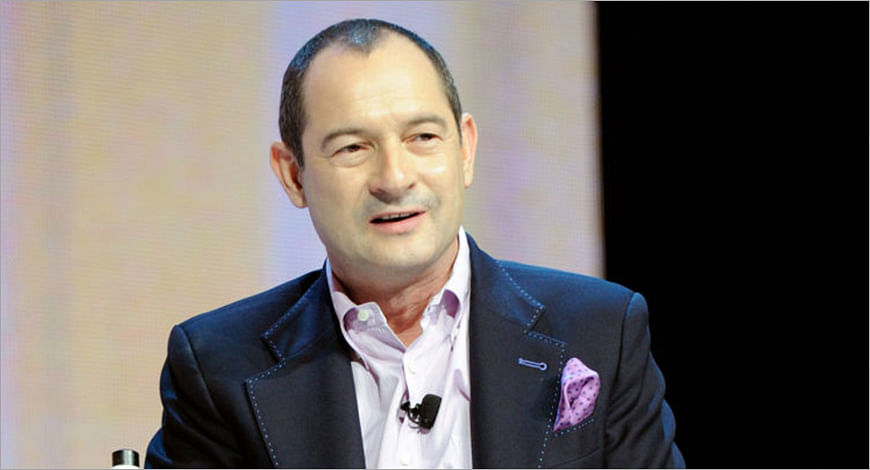
Addressing delegates at the International Advertising Association (IAA) Cabana, during the Cannes Lions International Festival of Creativity 2016 in a special session held by Hindustan Times, GroupM’s Global Chief Digital Officer Rob Norman stressed upon significant issues in managing supply chain in digital media.
“Everything boils down to an interesting notion - what presents an authentic opportunity? Every advertiser, when he spends money on an impression or on any other unit of advertising has the legitimate expectation that the publisher will be one in which the advertisement is seen by a human being for at least a feasible amount of time, and not by a robot or a fraudster,” he said.
What is a legitimate opportunity is not entirely a consistent notion, the speaker said, “because if you are looking at something and it is static on the screen for a given time, it is easy but if you are scrolling with your thumb at 500 pixels per second, which is often the case in feed-based environments, the mere fact that something passes through a viewable window may or may not be determined as legitimate opportunity. So working on the forward regulation and the commercial agreements around viewablility on a platform-specific basis is a huge priority for us.”
In his view, everyone in the supply chain has their own set of responsibilities. While the publisher has the responsibility of providing authentic opportunities, the advertiser has the responsibility to grow the propositions around the products and services that are of relevant value to the consumer. The creative partner, in all of this, has the responsibility of taking that proposition and making it compelling and sufficiently arresting to consume and the media agency has the responsibility of placing it in an environment that is fit for the target that it offers value. These are the fundamentals for digital advertising.
Does that require a different set of behaviour in the ecosystem between the stakeholders? While in some cases it does, he feels there are cases where it is in fairly perfect harmony. "Only by briefing (stakeholders) together can there be a harmonious implementation of the plan, and an equally harmonious attribution plan that allows you in setting an objective, defining a fit-for-purpose media placement," he said.
Touching upon the subject of ad-blocking, Norman explains that there has always been a covert contract between the publishers and users of the content - if the user does not want to pay directly for the content then he has to tolerate the amount of advertising for which he may or may not pay attention to. However, with the rise of the ad blocking software, the covert contract gets broken and the user of the ad blocking software chooses not to participate in that contract by blocking the monetization mechanism of the publisher.
In order to resolve this problem, the publisher either has to create content of sufficient value, which people will accept, with the ad blocker turned off or build a greater value by turning into a monetization model from advertisement-driven to subscriber-driven. Norman further stressed upon the need to create advertising assets that are not just compelling but “thumb-stopping” creative.
Responding to a point regarding video consumption patterns on mobiles, Norman pointed out that the lag in adoption of 4G technology has affected video consumption in various parts of the world, particularly India. Giving the context of the Indian market, Norman explained that the only app that works on the 2G platform is Facebook since it has been built fit-for-purpose by downgrading many of its features that could mar speed. Issues such as buffering of video content existed on 3G platforms as well and that 4G has been introduced only in some parts of the country.
Q.
Read more news about (internet advertising India, internet advertising, advertising India, digital advertising India, media advertising India)
For more updates, be socially connected with us onInstagram, LinkedIn, Twitter, Facebook Youtube & Whatsapp
 Share
ShareArun Iyer, Chief Creative Officer, Lowe Lintas
“Go to a pitch with your point of view, not necessarily what the client wants, because at the end of the day they come to you because they want your thinking,” believes Arun Iyer, Chief Creative Officer, Lowe Lintas.
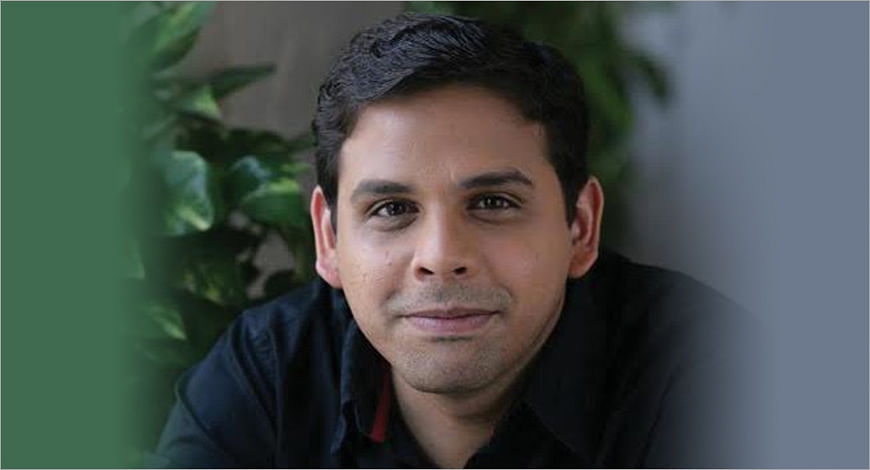
“We don’t carry options for pitches we go with a point of view, we strongly feel about, which is also why about 80 per cent of the pitch work is actually the first piece of work that we do for a client,” he shares.
Iyer, who took on the mantle of CCO last year, was earlier joint NCD with Amer Jaleel. As CCO, he believes one of his jobs is to make sure that while today is good, the next six months are lined up well.
The agency has consistently been in the news be it for kick-starting the year with its winning performance at the Effies or its recent work on Google’s photo feature that is being widely shared.
“I would like Lowe Lintas to be seen as an agency that a client would want to go to because they want a good idea on their brand which is medium agnostic,” adds Iyer. The world is headed towards ‘hyper-bundling’ (with clients are getting tired of handling multiple agencies) he believes, even as lays emphasis on getting mainstream teams to think digitally.
A candid Iyer shares his views on correcting the perception about Lowe just being a TV agency, why the move from NCD to CCO was not a dramatic one, what prompts ‘Ghar wapasi’ at Lowe, why he thinks there is a lot of ‘gas’ around ‘digital’ and more …………
Edited Excerpts-
Q. What are your expectations from Cannes for Lowe Lintas? We don’t enter from India so some of our work maybe entered from our global offices. My guess is that Lifebuoy Chamki entered by our Columbia office will do well at the awards.
Q. When you say ‘well’, it translates to Gold, Silver, Grand Prix? To be honest, I don’t understand that game too well, but I have feeling that it will be Gold.
Q. What are the changes that have been on your agenda as CCO? I am personally working very consciously towards correcting the perception about Lowe just being a TV agency. Chamki is a step in that direction, what we did for Paper Boat with ‘Hum Honge Kamyaab’ is a piece of content. Again what we have just done for Google Photos is actually content, there are many more things in the pipeline.
TV is still important and we do a lot of TV but somewhere, the world needs to start recognising that we are an agency that comes up with big ideas and that they sometimes happen to be led by TV. Even if you take for instance Tata Tea’s Power of 49, it’s actually a far bigger idea than the television commercial we created. But somehow the world still considers us only a television agency. That’s been the big shift that I have been working consciously on over the last one year.
I am not trying to change Lowe Lintas; I am trying to reach out to the world and actually tell them what we do, which is that we come up with ideas that are beyond television.
If you take Kissanpur, it is an idea that was born in our agency and the fact of the matter is that Kissanpur manifested itself in one TV commercial, and a whole bunch of forms like a huge activation idea, we have, in fact, created a great platform for the brand, and on the back of which we won global effectiveness awards.
Q. What are the challenges you face currently? The biggest challenge is to drive consistently good work. I think it’s a huge challenge because the only way to do that is to empower your people, align with the kind of stuff we need to be doing, and communicate clearly that this is the level at which we need to operate. Set a base level and let nothing drop below that - which is a continuous challenge. The only thing I worry about, fuss about and I keep telling my teams is; what’s coming up? What can we do better?
The challenge is also to continue the great creative culture that we have. To be honest, I have been really lucky, I have got really great people a really great team - the creative heads including the creative team.
Q. Do you think there is an over-emphasis on digital these days? Yes, 100 per cent, whilst digital is important because the mobile phone is transforming our country, and we cannot run away from that, but the noise around it in our industry is a lot of gas around this word ‘digital’.
Somebody needs to cut through it and get to the point of what is it that needs to be done. And that is what we are attempting to do with Linteractive’s new framework Deep Digitisation, which we have been working on since the last eight months.
We are trying to not let the clutter get to us and see how we can genuinely transform into an agency that thinks well digitally.
Q. How has this one year been for you? It has been exciting because we took the opportunity and we were confident enough to think that we can actually start another agency; it was a big call at that point of time.
The good part is that Mullen (Lintas) is doing very well and I think they are doing some nice work. This one year has been very hectic but we have managed to consistently put out work that has generated enough conversations for the agency, we have managed to put out great work, and create a culture that people want to belong to.
In fact, we have a term that people joke around in the agency called ‘Arre iski bhi Ghar waapsi hogayi’; there are so many people who have left us and who have pretty much come back soon. One of the things I am quite arrogant about is that when people go out of our system, they realise the value of our system.

Q. How has it been on an individual level? I have spent lesser time than I would have liked with my family but they have been supportive enough. I know the Mumbai Airport better than anybody in the city right now. It’s been a lot of travel but what I have absolutely enjoyed the most is, working with a lot of creative people and that number has increased a lot more now. For me, the trip in life is to actually sit and jam with creative people and come up with solutions and I have got more opportunity to do that so, it’s absolutely fantastic.
Q. You have been with Lowe since 2003, how did things change for you from NCD to CCO? I joined as a copy writer in 2003 and I have grown through the ranks.
When I became NCD in 2010, it was a dramatic shift for me. There are three levels between GCD and NCD. Balki picked me and said sit here, so I skipped three levels to run one group in the office on the 13th floor and suddenly, I was running half of Bombay, all of Bangalore and Chennai. So, that year was dramatic in my life. Since I have worked for six years as NCD, this was a smoother transition.
Q. You never wanted the option of running Mullen? That’s actually a conversation between Balki(Group Chairman of MullenLowe Lintas Group) Joe (Regional President, South & Southeast Asia, Group CEO India, Mullen Lowe Lintas ) me and Amer (Chairman & Chief Creative Officer Mullen Lintas) and it was a good three-four rounds of discussions until we came to a consensus on the structure we want. So, it wasn’t a diktat or a personal decision, we sat together and we said, okay, this is what is best to do.
Read more news about (internet advertising India, internet advertising, advertising India, digital advertising India, media advertising India)
For more updates, be socially connected with us onInstagram, LinkedIn, Twitter, Facebook Youtube & Whatsapp
Rana Barua and Ashish Chakravarty, CEO and CCO, Contract
In a freewheeling chat, Rana Barua and Ashish Chakravarty, Contract’s CEO and CCO respectively get talking on the agency’s recent wins, which include ITC Personal Care, Century LED bulbs, Abbott Healthcare, Lupin OTC, Orient Fans, Reckitt & Colman, Garnier among others. Contract has also won the mandate for mygov.in, one of the largest mandates from the Government of India. <br><br> The duo field questions on receiving offers from other agencies, what is a compelling offer to them, taking Contract to the next level why clients are willing to wait for the agency today and more
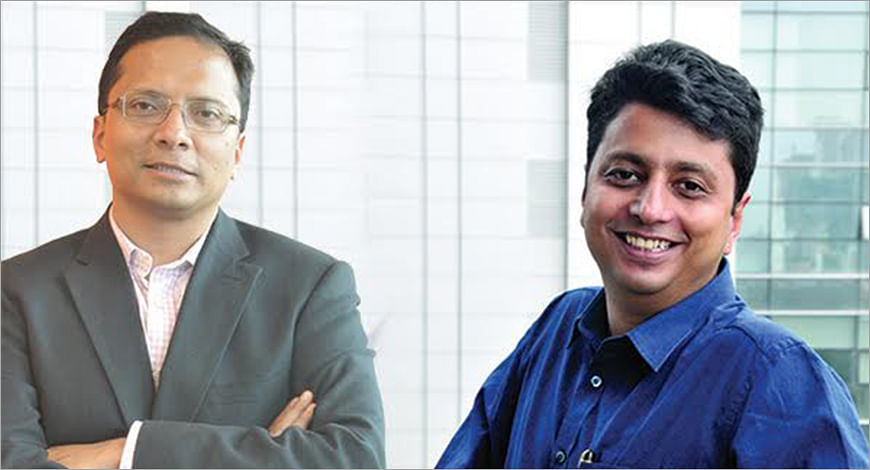
The duo field questions on receiving offers from other agencies, what is a compelling offer to them, taking Contract to the next level why clients are willing to wait for the agency today and more
“Singularly or as a team barring two or three very obvious network agencies, everyone has made an offer at some point or the other,” says Chakravarty in a matter-of-fact manner.
Given their team work and working equation, ‘if’ they ever considered moving out, would it be as a team? Together would be an ideal scenario agrees the duo, but the offer has to be compelling enough.
And what makes a compelling offer for the duo? A compelling offer would be a large network, a solidly creative, global kind of entity coming into India, something that is a bigger challenge than what we have achieved, say both unanimously.
Barua joined Contract in 2013, Chakravarty came on board a couple of months later.
Chakravarty makes an interesting observation on one of the differences about the agency today.
Q. There were rumours that you were moving on from Contract; what is your take on that? RB: Conversations keep happening. There was never intent of either looking out or moving out, and there still isn’t. There were also a lot of non- committal meetings with people who I respect and are friends. Was there a genuine desire to move out? Not yet.
Q. When Cadbury moved gums and candy to Saatchi and Saatchi, there was a perception that the Cadbury account moved out of Contract….. RB: Cadbury’s Celebrations is the local jewel, which stays with Contract because we have built Celebrations. Celebrations was started by Contract, the relationship is that old, the brands that have moved was due to pure global re-alignment.
AC: Our relationship with Cadbury is very deeply embedded, I believe Celebrations is the only brand in the world where gifting has been successful. Our Eid film was successful not just for Celebrations but for the entire range of Cadbury products, giving it a very good spike.
Q. In an industry where agencies are judged on their creative product, how has the agency’s creative offering evolved to suit the changing brand dynamics? AC: We have instilled an entrepreneurial spirit into the system. While there are different departments, we are all in it together - it’s a business to do shining work for the client.
It is not about individual glory but how to leverage creative as a tool for acquiring business. That reflects in the way we work. We have changed the entire rules of working on a client brief; we have people from all departments on the deck solving the issue of a client using the different tools available - that’s the spirit of a start-up, that’s an e-commerce scenario where individuals are not separated by departments. To a degree, we ascribe our success both in business and in creative to this spirit that we have in Contract. It’s about solving a business problem using creative, and therefore, beneficial both for the client and business.

Q. Given the equation between you two, no power camps at Contract? RB: We work in alignment and alignment is that common goal that both of us have set for each other.
Power camp kind-of conversations are likely to happen when both take independent calls but because of our alignment, you see the same percolating down the line at least 80 per cent in the agency, which is fabulous.
AC: Since we are aligned, what is happening across the agency and departments is that people are looking out for each other; it is not one against the other. If the other person has failed and I am gaining joy out of it then something is wrong. Wherever that happens, the agency is going to get crippled. That has started to flow and it is not across departments, it’s across geographies. You know that you are winning as a team or you lose as individuals. I think that sense has gone down. It’s not magic, it’s just that you put a set of people with a common purpose and then they align over a period of time.
Q. When you took charge at Contract, your initial focus was to stabilise the ship, then you went aggressively after new business, where is the agency at now? RB: What we managed to do with Contract is to make it a far more stable ship. If you look at the number of people who came on board in 2013, including me, Ashish and many of them, including many senior people and individual talents. They have got multiple offers but have stayed together. Secondly, if you look at the number of clients that have come on board and stayed with us, it’s a massive list of people who have invested in Contract. Without naming any agency, there are so many of them that are struggling to find a footing. Our conversation with clients is about creative effectiveness, product, planning - it’s a very different conversation. So, if you ask me if the mission is over, I would say, no. There are many categories that are open to Contract, there are many clients who are talking to us, and there are many more things we can do if we want but it also matters on our bandwidth.
Q. So are you saying no to pitches/ new clients if the bandwidth doesn’t permit it? RB: In many instances clients are ready to wait for us…
AC: Our first priority is to our existing clients..
RB: If we go for a pitch we go for a win. A lot of heartache goes into pitches and a loss is demotivating for the entire team, so there is no point just going for the heck of it. Also pitches we go into today are of a certain size and scale, let me put it this way, we have been going for pitches with the top few agencies in the country.
AC: If there is an urgent requirement, we excuse ourselves if there are bandwidth issues. Also a lot of what happened and worked for us last year was when a client approached us, we showed them our work and the team who would be working on the account and asked them to work with us without a pitch, in a whole lot of cases we were able to work on numerous projects in the manner.
Q. Any reason for the silence since the last one year? RB: There are two or three reasons you talk; when you need to, when you need a lot of attention and when you need to make a conversation. Right now conversations, attention and a lot of engagement is happening on its own. Whether it’s with clients, whether it’s with people, a lot of things are happening. There is no particular reason to come out and say something which requires any kind of eyeballs for us. Our work is speaking for itself.
Q. What would be some of the focus areas for you going forward? AC: I think it would be to up the ante in some of areas like design. The other would be newer forms of engagement.
Read more news about (internet advertising India, internet advertising, advertising India, digital advertising India, media advertising India)
For more updates, be socially connected with us onInstagram, LinkedIn, Twitter, Facebook Youtube & Whatsapp
Charles Courtier, Global CEO, MEC
MEC’s Global CEO Charles Courtier gets candid about not playing the under-cutting game, why more regular pitching is the new normal after the ‘Mediapalooza’ of 2015, take-aways from as well as focus areas for MEC India
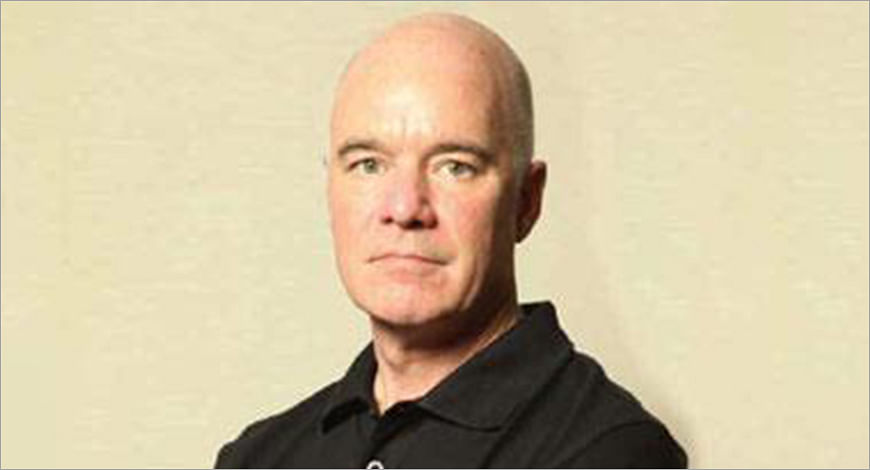
The agency globally saw a double digital growth last year (above 10%), which in 2015 was a very good performance, feels Courtier, even as he says that it is a bit early to comment on the agency’s performance this year.
Courtier declares that the overall view around India is very optimistic and global leaders continue to have faith in India as a fast growing market, more so, because growth in China has started to slow down, making the gaze on India more pronounced. On digital, Courtier believes it is just a matter of ‘speed’ at which digital takes over the Indian market, when comparing it with global markets like the US, Europe and even China to some extent, rather than ‘when’ it will take over.
Edited excerpts from a conversation Charles Courtier had with Priyanka Mehra:
Q. Are we done and dusted with the craziness of last year's ‘Mediapalooza’ wherein an extraordinary number of big clients put their accounts up for global review at the same time? I don’t think it is done. But you are right... it was crazy, and if I were a big client, the last thing I would do now is pitch my business, because how on earth would I get the best out of any agency when they are drowning in these enormous pitches? Having said that, I think much more regular pitching is the new normal. And I don’t think it started in 2015 - I think we are quite used to pitch and re-pitch of businesses on a very regular basis and that’s going to continue. It might not be 2015 every year, but I think we will continue to see a lot of media pitches every year.
Q. What are the possible reasons for this, in your view? I think there are two key reasons. One is procurement, because companies and businesses are all under tremendous pressure, and the media number on the balance sheet is a very big one in most clients’ businesses. So, procurement is a fact of life, it is very important for these companies to get the best efficiencies and value that they can for the money they are spending. Procurement is competitive from a pricing point of view. The other side of it, to some degree, is fear in the sense that the communication business is changing so massively, that I think clients want to test if the agency has the right skillset to navigate them strategically through the chaotic, difficult and fast-changing media world driven by changing consumer preferences. Marketing is changing so fast; if you are a CMO in a big company, you know it’s hard to keep up with everything that is going around. The way the consumers are buying your goods or entertainment is changing so fast that the CMOs in that situation need to know, and they want to check that the skills they need are there.

Q. How do you deal with under-cutting, especially given the added pressure of significant global pitches and a cut-throat competitive scenario? The only way to deal with it is responsibly. We have to be competitive on price. Yes, there are situations where somebody does something crazy and you get under-cut; yes, everybody has a story of when that happened. But honestly, if you get into that game, it’s a very short-lived game; don’t think you are doing your client any favour because you can’t sustain under-cut prices. In the end, you have to be responsible in terms of pricing that you are putting forward; you have to deliver it over a long-term basis. So to answer your question, we won’t play that game.
Q. What are your focus areas for India from a global perspective? Digital is key, because I believe it is the tipping point and India is on the cusp of that. It is all about ensuring we are ahead of competition in terms of our digital and our data capability. So, absolutely that is the priority, because we can see the wave of opportunity about to come so we have to be ready for it. The business has grown fantastically over the years and has great opportunity. You have to have talent to manage that growth and also to sustain that growth. The development and diversity of talent is another key focus area; growth of talent is equal to growth of the business for us.
Q. What would you like to take from MEC India to MEC globally? India is a very entrepreneurial country. When we look at MEC here, in comparison to MEC globally, there is a real tough entrepreneurial spirit in India. And if I could take that, box it, move it and export it around the world, I would.
Read more news about (internet advertising India, internet advertising, advertising India, digital advertising India, media advertising India)
For more updates, be socially connected with us onInstagram, LinkedIn, Twitter, Facebook Youtube & Whatsapp
Sajan RaJ Kurup, Founder & Creative Chairman, Creativeland Asia
Last year was an eventful year for Sajan Raj Kurup Founder & Creative Chairman Creativeland Asia, a visibly exhausted but spirited Kurup gets candid about why industry do’s are ‘unexciting’ for him, why staying away from Goafest has added to the agency’s culture and focus, expanding operations beyond India, Why charging a pitch fee still works for CLA, his thought process behind work for Micromax, and life after Parle Agro.
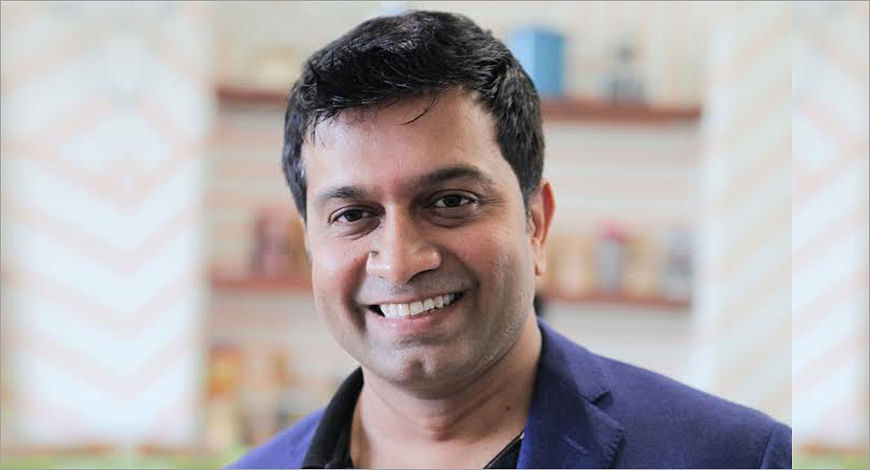
Q. What is the insight behind the new logo and tagline—‘Nuts: Guts: Glory’ for Micromax? Nothing symbolizes a cultural revolution in an organization as much as a change in identity. This exercise wasn’t about redesigning a logo and writing a tagline. It was about capturing the Micromax culture. For this we studied the Micromax story of four guys taking a brave decision to risk it all and enter the devices market. We traced their journey that started evolving from the back-alleys of the mobile phone revolution in India and all the way up to the global scene. We sat and understood the personalities of the founders, their ambitions and plans. What stuck out for us was a sincere amount of audacity. So, for Micromax, we created a line that establishes the innate desire for audacious and unconventional victories. And decided to scribe it as ‘Nuts: Guts: Glory’ in an unconventional slogan of sorts.
Q. The new campaign is completely different in tonality and positioning, and definitely more aggressive, was this the brief given to the agency? The most defining characteristic of this generation is the admiration for (and a desire to emulate) the crazy and the brave. To not just win, but to win big. To make irrational decisions, and to win madly. This cultural fuel becomes meaningful for us when it connects with the Brand Ethos.
In many ways, Micromax embodies this spirit we see coursing through the veins of the nation.
Anyone who has followed Micromax closely would know that the brand has an audacious story of how it was born in the back alleys of the mobile revolution in this country and has propelled itself on to the global stage in less than a decade.
Micromax is clearly an unconventional winner brand. It is a brand that’s taken chances, fought off much larger, more reputable competitors and still managed to come out in the driver’s seat. It has a sheer bloody-minded will to succeed.
It’s brash, bold and defiant .Which is why it goes for it. It’s why it doesn’t do things in half-measures.
Q. What does the campaign aim to achieve? A large part of the campaign objective is also to break a de facto price ceiling when it comes to how the brand is perceived and to align the cultural fuel and brand ethos with the new brand philosophy of ‘Nuts: Guts: Glory’ for its next phase of growth.
Micromax’s ability to premiumize itself lies in creating more meaning around what the brand stands for, its philosophy, how it sees its story, how it sees its users and how it delivers across the entire user brand experience.
Q. Do you have any plans of expanding operations beyond India? Yes, we have already incorporated an entity in Singapore. We have been studying various strategic overseas markets for the last three years now. We have already started engaging with brands in some of these markets. Slowly but surely you will hear more about our expansions beyond India.
Q. You are now a rarity at industry do’s as well, is this a result of the over hyped loss around the Parle account or is this a conscious effort on your part to stay away from the advertising industry? The Parle Agro- CLA split affected the industry gossip mongers more than it affected Parle Agro or Creativeland. We have moved on to business as usual. People who know me have learned to ignore the over-hype or gossip. It has nothing to do with being a rarity at industry dos.
Look, I am terrible at befriending, small talk etc. And, I don’t even drink alcohol any more. So, I don’t know what to do there once I get there. Also, instinctively, I can be quite politically incorrect and blunt. So, it would be kind of dangerous and not so exciting for me to be at all these ‘industry dos’.
I am better at focusing on what I am good at and what I enjoy.
Q. What are your thoughts on the new Frooti brand campaign? I’d prefer to pass this question.
Q. CLA charges a premium, at the same time you refrain from pitching how does this work in the real world? Creativeland doesn’t undercut itself or others. More times than often, we have won mandates despite of not being the L1 on cost at the procurement desk. We believe in creating great value for our clients and ourselves. We handpick our client partners as carefully as we pick our talent. It has been almost 9 years of Creativeland and every single year we have successfully delivered on setting benchmarks in every category we have brands to work with. Over the years, we have more and more clients inviting us to pitch and paying us a pitch fee for it. Every time a potential client says, “We are very excited to have you pitch and we are very keen to see the Creativeland perspective” I know the value the decision of sticking with a pitch fee has created for Creativeland.
Q. You haven’t participated in Goafest for 4 years now, 2012 was the last time CLA participated. Will we see CLA back at Goafest? The years we participated in Goafest, we have won big in front of a full house of participants. We have won big in competition with strong organizations like Ogilvy. Especially in the film and integrated campaign categories including the integrated grand prix in 2012. But, some of us also saw some amount of ganging up against winners, lobbying and alarming levels of scam ads by agencies desperate to win. Since we have a clearly different point of view on how awards must be conducted and instituted, I decided to step away. We haven’t missed being at the fest even once. In fact, staying away has added to our culture and focus.
Q. Coming back to Micromax, is this the first campaign that CLA has worked on, for a global audience? We have had several instances in the past when our campaigns have been used in overseas market/global audience. Audi, for instance. A lot of our work was considered and used in the Asian and European markets. The work we do for a lot of brands at Godrej gets used across the SAARC countries. Even as we speak, there are a few more global initiatives Creativeland is in the midst of in Africa, EU and US, apart from Micromax of course.
Q. Is this a very different task from some of the others that Creativeland has done for brands in the past? We’ve had invaluable experience of dealing with premiumization challenges across different categories.
We successfully repositioned Cinthol from being a popular segment soap to being at the premium end of the bathing soap category, making it a youthful and gender-neutral brand in the process. We did this by telling young India “Alive is Awesome.”
We re-positioned MTS from being a lower SEC, voice-driven brand for price-sensitive customers to becoming a data-focused brand for the digital youth of today, who consume gigabytes for breakfast.
We made MTS the definitive telecom brand for “The Internet Generation”, significantly growing its ARPU in the process. While these categories may work differently from each other, there’s no denying that building a consistent, meaningful brand identity and philosophy is key to capturing the hearts and wallets of contemporary, young India today.
And as this category slides further into parity product problems, brands will need to start differentiating themselves based on personality, based on how they make consumers feel about themselves, and how consumers identify with their beliefs.
Read more news about (internet advertising India, internet advertising, advertising India, digital advertising India, media advertising India)
For more updates, be socially connected with us onInstagram, LinkedIn, Twitter, Facebook Youtube & Whatsapp
Carter Murray, Worldwide CEO, FCB
Carter Murray, Worldwide CEO, FCB, talks about his expectations from Rohit Ohri who will don the role of Group Chairman and CEO (India) in January this year, speculations around talent moving from Dentsu to FCB. He also reacts to speculations around Satbir Singh, and talks about reasons for not wanting to make any revolutionary changes in to the agency in India. Excerpts:
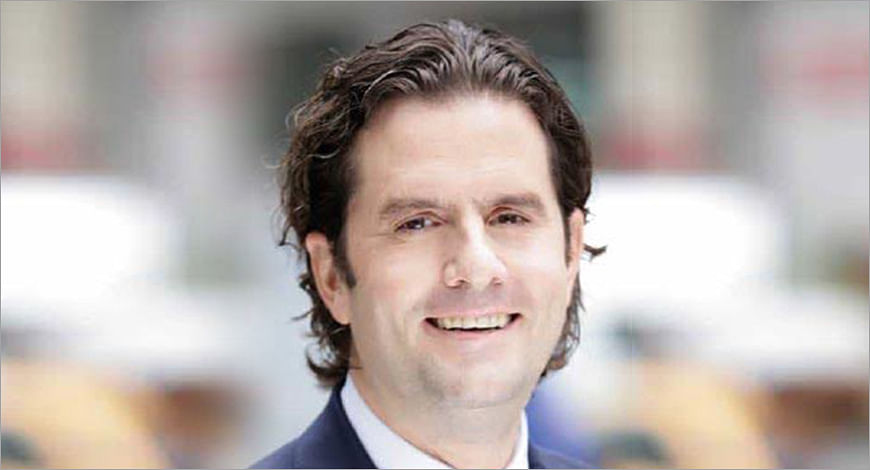
In an interview with Priyanka Mehra, Carter Murray, Worldwide CEO, FCB, talks about his expectations from Rohit Ohri who will don the role of Group Chairman and CEO(India) in January this year, speculations around talent moving from Dentsu to FCB. He also reacts to speculations around Satbir Singh, and talks about reasons for not wanting to make any revolutionary changes in to the agency in India...
Q. Are there key areas that the industry needs to work on from a creative perspective? There is opportunity in art and design, to elevate the level of advertising. With creativity you have to take lateral leaps and I think there’s a cultural environment in which we can do that even more here.
Q. What is your reaction on the speculation regarding Satbir’s ( Satbir Singh, Chief Creative Officer, FCB) exit? This is unhealthy gossip which is being spoken about which is untrue, of course there is gossip when a large company appoints a CEO, but it is unhealthy and unfair to the people who come to work everyday, We are in a talent business and we need to treat people with respect. Satbir is a really creative guy and really respected and it is unfair that people are saying that. Rohit who is the new CEO coming on board is a grown up, a good leader and he will give everyone a chance.
As the Global CEO, I will, like for any new CEO, after 90 days, come here and ask for a plan and assessment of the team. We’ve put in place a rigorous HR so we know exactly where people are. So if he feels they’re in a different place then he will have to explain to us why. When you are in a talent business, there are checks and balances in place to make sure great people are taken care of.
Q. How are you working to ‘up’ the agency’s creative quotient in India? I have very big ambitions for FCB Ulka. With Rohit coming on-board along with some of the creative talent we have already, my challenge to them is how we can help our clients and work together with them to raise the profile of India on a global stage in the industry we are in.
Most countries have a belief, probably partially correctly that they have a rich vein of creativity and a right to be in the forefront of creativity. India is one of the few countries that has a natural birth-right for creativity and has a right to play a much bigger role on the global stage but I don’t think India does it nearly as much as it can currently.
Q. What is the mandate given to Rohit Ohri as Group Chairman and CEO? There are certain goals that I, as Global CEO look to deliver and I expect the same from all other CEOs including Rohit. One is to be able to retain and attract the very best talent in the industry. Through his leadership he needs to create a culture and ambition to attract and keep key talent.
He should have energy and passion for the creative business. Sometimes our industry follows trends, which is understandable but the core of what we do is creative work.
I am excited about Rohit coming on board because he is the right influx of talent and will give the right perspective to the team we have here and take Ulka on the next step of its journey. It is very different from a reinvention where you bring a team on board to completely change things. That’s not we have here. Here we have a successful agency and a strong culture.
Rohit is going to bring fresh energy and perspective to what is already an experienced energised team.
Q. Will we be seeing a lot of movement of talent from Dentsu to FCB? I have heard of a lot of speculation around this, but it’s untrue. Rohit needs to come onboard and see what the team is here. I assume he might want to bring one or two individuals onboard with him. Speculating on what Rohit will do is unfair to him.
Q. Which other Indian agencies do you see doing good work in your view? I think Lowe and Mcann have had a good reputation for a long time. We mainly look to our sister companies for competition. There are also one or two boutique companies that have started, from which I think more and more of the competition will come, in the future.
Q. What do you want to change on the business front in India? For this market we are not making crazy margins but we are making fair margins. I want to grow but I don’t have any revolutionary ambitions or desires. I don’t have any pressures to double the size of the margin because if I push the margin too far I’ll start to destroy the company. I want Ulka to keep its size and scale. Yes, I do want to keep growing but I want to do that by focusing on the creative talent and product. A lot of the holding companies and networks today have been pushed into putting the numbers first.
Read more news about (internet advertising India, internet advertising, advertising India, digital advertising India, media advertising India)
For more updates, be socially connected with us onInstagram, LinkedIn, Twitter, Facebook Youtube & Whatsapp
Vikram Sakhuja, Equity Partner and Group CEO, Madison Media Group (including OOH)
“All media agencies today are gearing for change in an environment of digital, data, and technology. This is potentially changing the way we target, work seamlessly across media, deal with a connected consumer and deliver outcomes. This re-engineering, if you want to call it that, is as applicable to Madison as it is too any other agency. I hope to play my role in being a catalyst of change”
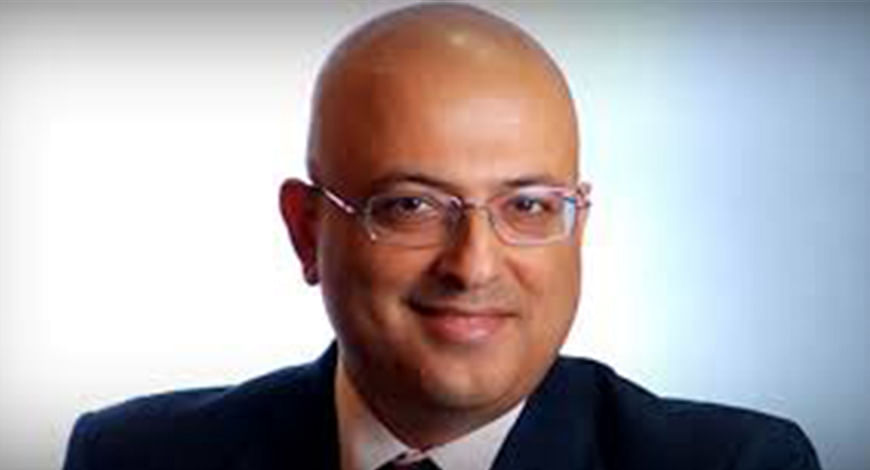
The news of GroupM’s Vikram Sakhuja joining Sam Balsara’s Madison Media Group including OOH as Equity Partner and Group CEO took the industry by storm in April this year.
In his new role, Sakhuja will be responsible for the Media and OOH business of Madison World. He will work closely with Sam Balsara.
Interview
In a brief chat with exchange4media on his first day at Madison, Sakhuja a highly respected name in the media industry, talks about his expectations from Team Madison, his excitement on working with Sam Balsara, who he has known for over two decades now.
Sakhuja also answers the question on speculations over the possible movement of talent as well as clients from GroupM to Madison post his move, in his own inimitable way.
Excerpts:
Q. You have known Sam Balsara for over two decades now in your various roles as a client and a formidable competitor. What are the advantages of your partnership, despite the perceived difference in leadership styles? Sam is a great dealmaker with an exceptional commercial acumen, and I have a decent strategic mind with a good record of growing business and organizations. Both of us believe in client-value and we both have more than a decent network in the media marketing ecosystem. I’m excited about teaming up with someone I’ve respected and admired for over two decades. I hope for starters to rub off some of his amazing energy and spirit on to me.
Q. You have been a digital evangelist at GroupM and Maxus. What is your approach and strategy towards bolstering Madison’s digital offerings? I have just joined today, so it would be presumptuous and premature to talk of a digital strategy now. Suffice to say for now, I believe in digital being a specialism that needs to integrate into the overall plan rather than work as a silo.
Q. In a recent interview with exchange4media, Dominic Proctor (President, GroupM Global) said “Madison has a fine heritage and clearly needs to re-engineer for the future. I guess that's why they have taken him on” on your exit from GroupM and joining Madison as Equity Partner. What would you like to say about his observation on the need for Madison to re-engineer for the future? All media agencies today are gearing for change in an environment of digital, data, and technology. This is potentially changing the way we target, work seamlessly across media, deal with a connected consumer and deliver outcomes. This re-engineering, if you want to call it that, is as applicable to Madison as it is too any other agency. I hope to play my role in being a catalyst of change.
Q. What would you like to say about speculation on the possible movement of talent as well as clients from GroupM to Madison post you taking charge at Madison? If you’re trying to flatter me into thinking that my old friends might want to follow me, you are succeeding. The truth is that talent are looking for growth in four areas: exciting work, personal and career growth, an organization and leaders they can look up to, and economic wellbeing. Good organizations that focus on these normally don’t worry about flight of talent.
Q. Is building on ecommerce business also going to be an area of focus for you adding on the Snapdeal business? Agencies learn from all their clients. ecommerce is clearly a sunshine industry with great momentum. One, we can learn much from – especially the always on, real time nature of business and the link between cause and effect. That said, traditional businesses bring a huge foundation of consumer marketing skills. So short answer is that all sectors require focus, including of course, ecommerce.
Q. You recently said you might bring in to Madison the culture of setting ambitious targets and trying to achieve them, do you think the agency needs this more now with the recent loss of Mondelez (on account of a global pitch) and Airtel at earlier this year; both of which are significantly large accounts. What is your strategy towards Madison regaining lost ground and going on to new heights? The context of that comment was the difference between MNCs and local companies. MNCs of which I have been part of are more target-driven than local companies. My philosophy on targets is really one about objective setting. My conviction is that if managers are clear about deliverables, they are also smart enough to achieve them. On Madison strategy, I am hardly likely to reveal it, especially on my first day of joining.
Q. While we have covered extensively what is it that you would like to change and strengthen within Madison. What are your expectations from Team Madison? To have a passion for making a difference to our clients’ brands, and to enjoy what they do.
Read more news about (internet advertising India, internet advertising, advertising India, digital advertising India, media advertising India)
For more updates, be socially connected with us onInstagram, LinkedIn, Twitter, Facebook Youtube & Whatsapp